Global retail IT deployments fail more often because of coordination breakdowns than because of flawed technology. When your organization plans to upgrade POS systems, install digital signage, or refresh network infrastructure across dozens or hundreds of store locations, the real challenge is executing that plan consistently at every site.
This guide covers the operational frameworks, staffing models, and coordination strategies that separate successful retail technology deployments from the ones that stall midway through. Kinettix helps MSPs and enterprise retail IT teams coordinate these deployments across 120+ countries with centralized project management and vetted local field technicians.
If you have managed a multi-site technology rollout before, you already know that the gap between a working pilot and a scaled deployment is where most projects break down. The sections below give you a practical framework for closing that gap.
Key Takeaways: Global Retail IT Deployments
- Multi-site retail technology deployments require centralized coordination to maintain consistency across regions and countries.
- Site assessments, tiered scheduling, and standardized scopes of work prevent the most common causes of rollout delays.
- Kinettix provides vetted field technicians and API-driven project coordination in 120+ countries through its Dispatch1 platform.
- Local compliance, permitting, and labor regulations vary by country and must be addressed before scheduling installations.
- Real-time visibility into technician status and project milestones is essential for catching issues before they cascade.
Why Multi-Site Retail Technology Deployments Fail
Most multi-site retail technology deployment failures are execution problems, not technology problems. The hardware works. The software is configured. But the rollout stalls because field coordination breaks down when it scales beyond a single region.
According to Coresight Research's 2026 State of In-Store Retailing report, retailers reported losing 6.4% of gross sales due to store inefficiencies, up from 5.5% in 2025. That financial exposure grows significantly when technology rollouts add execution delays to existing operational gaps.
Retail IT teams at organizations with hundreds of locations often operate with small, centralized groups of 15 to 30 people. That team handles vendor selection, platform management, and security. When a rollout moves into the field, they depend on local technicians, regional vendors, and external coordinators who may not share the same standards or communication cadence.
Common execution breakdowns include inconsistent technician quality across locations, return visits caused by incomplete site surveys, gaps in real-time project visibility, and misaligned scheduling that conflicts with store operating hours. Each of these problems multiplies when the rollout spans multiple countries with different labor markets, permitting requirements, and infrastructure conditions.
How to Structure a Global Retail IT Deployment
A successful global retail IT deployment follows a structured sequence: pre-deployment planning, site readiness validation, phased scheduling, field execution, and post-deployment verification. Skipping any of these stages introduces risk that compounds across locations.
Pre-Deployment Planning and Scope Definition
Start by defining a standardized scope of work (SOW) that applies to every location. The SOW should specify the equipment to be installed, the network configuration requirements, the acceptance criteria for each site, and the documentation deliverables required from the field technician upon completion.
Standardization does not mean ignoring site-specific variables. It means building a baseline scope that accounts for the 80% of work that is identical across locations, with documented exception-handling procedures for the 20% that varies.
Site Readiness Validation
Before scheduling any installation, validate that each site meets the prerequisites for the deployment. This includes confirming that power, cabling, mounting hardware, and network connectivity are in place. For international sites, it also means verifying that local permits have been secured and that import requirements for equipment have been met.
Organizations that skip this step consistently experience the most costly delays. Return visits to complete unfinished work can double the per-site cost of a deployment and push timelines back by weeks.
Phased Scheduling by Region and Complexity
Group your rollout sites into tiers based on geographic density, site complexity, and local labor availability. Tier 1 sites are standardized retail environments with consistent layouts. Tier 2 sites have minor variations in infrastructure or compliance requirements. Tier 3 sites require custom work or operate under strict regulatory conditions.
Schedule deployments in regional waves rather than attempting a simultaneous global launch. This approach lets your project management team identify problems during the first wave and adjust procedures before scaling to subsequent regions.
Coordinating International Field Technicians
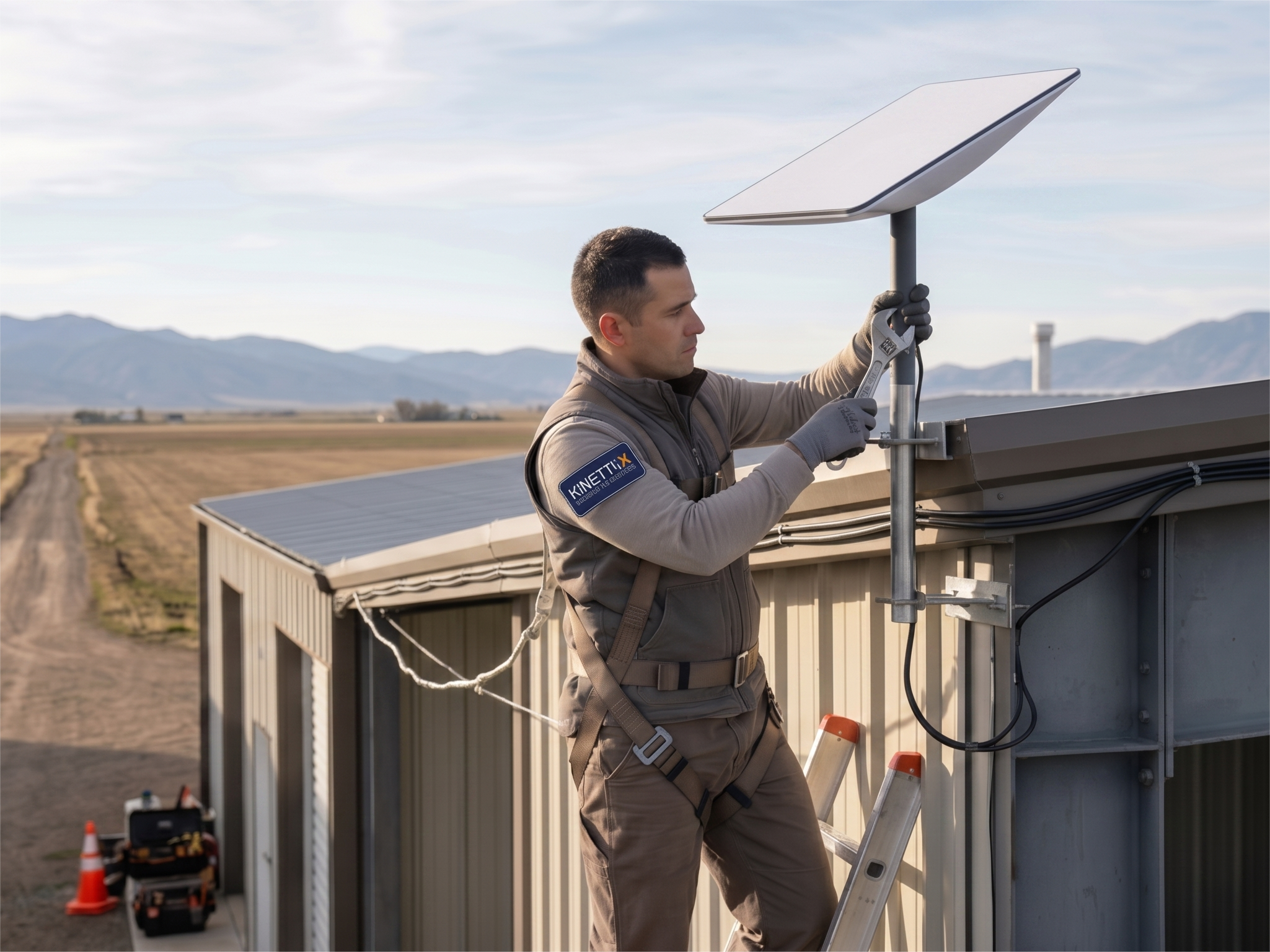
The most operationally demanding part of a global retail deployment is sourcing, vetting, and managing field technicians in every country where you have locations. Internal teams rarely have the local network to staff installations in 10, 20, or 50 countries simultaneously.
This is where a field services partner with an established global network becomes essential. Kinettix maintains a network of vetted certified field technicians available in over 120 countries, with operational centers in Cincinnati and Cebu providing 24/7 coordination coverage. Each technician is screened for the specific hardware and platform skills required by the project SOW.
Effective international coordination requires three things: a single point of accountability for field execution, a platform that provides real-time status updates from every site, and local compliance knowledge in each deployment market. Without all three, you lose visibility into what is happening on the ground, and problems go undetected until they affect downstream locations.
Building Real-Time Visibility Into Your Rollout
Visibility is the difference between catching a problem at one location and discovering it has already propagated across 40 sites. When your project management team can see technician check-in times, site photos, installation notes, and issue escalations in real time, they can intervene before small problems become rollout-wide delays.
Kinettix addresses this through its proprietary Dispatch1 platform, which provides real-time ETAs, status updates, photos, notes, and closure data for every field service event. The platform is API-driven, which means it integrates with your existing field service management (FSM) system so your team does not need to adopt a separate tool or change existing workflows.
Centralized dashboards that consolidate data from every active site give program managers the ability to track progress against the rollout schedule, identify sites that are falling behind, and reallocate technician resources dynamically. This level of operational transparency is difficult to achieve when you are coordinating multiple regional vendors without a unified platform.
Navigating Local Compliance and Permitting
International retail deployments introduce regulatory and compliance variables that do not exist in domestic rollouts. Each country has its own electrical codes, import regulations, labor laws, and permitting requirements. Ignoring these differences is one of the fastest ways to halt an installation mid-deployment.
Before entering a new market, confirm which local permits are required for the installation work, whether imported equipment needs certification or customs clearance, and what labor regulations govern the use of contract technicians. Kinettix uses local compliance specialists in each deployment market to ensure that installations meet the relevant codes and regulations before work begins.
Building compliance checks into your pre-deployment process, rather than addressing them after problems surface, prevents the delays and penalties that catch under-prepared teams off guard.
Staffing Models for Scalable Retail Deployments
Retail technology deployments rarely follow a predictable, even workload. Demand surges during store opening seasons, refresh cycles, and holiday preparation periods. A staffing model that works during steady-state operations will not hold up when you need to deploy across 200 locations in a single quarter.
Contingent workforce models give your organization the flexibility to scale field technician resources up or down based on project volume. Instead of maintaining a large permanent field team, you access vetted technicians on demand through a coordination partner. Kinettix offers flexible staffing through its staff augmentation program, allowing your organization to scale its field services capacity without long-term staffing commitments.
This model is particularly effective for MSPs that need to support multiple retail IT clients with different deployment schedules. A centralized coordination partner absorbs the operational burden of sourcing, vetting, and dispatching technicians, freeing your internal team to focus on client relationships and project strategy.
Post-Deployment Verification and Ongoing Support
The deployment is not complete when the technician leaves the site. Post-deployment verification confirms that every installation meets the acceptance criteria defined in the original SOW. This includes validating network connectivity, testing hardware functionality, confirming that documentation and site photos have been collected, and closing out the service ticket with detailed notes.
Organizations that build verification into their deployment process catch configuration errors and incomplete installations before they affect store operations. Kinettix provides break/fix support and ongoing maintenance dispatches for locations that need follow-up work after the initial deployment.
For ongoing support, consider establishing a dedicated field services engagement model that covers routine maintenance, emergency break/fix dispatches, and periodic technology refreshes. A consistent partner for both deployment and ongoing support reduces the onboarding overhead that comes with engaging a new vendor for every service event.
How Kinettix Supports Global Retail IT Deployments
Kinettix serves as a global field service execution partner for MSPs and enterprise retail organizations. With operations in over 90 countries, service centers in Cincinnati and Cebu, and a network of 10,000+ vetted field technicians, Kinettix provides end-to-end project management for retail technology deployments of any scale.
Through the Dispatch1 platform, your team gains real-time visibility into every field service event, from technician dispatch to site closure. The platform is hardware and vendor agnostic, supporting POS systems, digital signage, network equipment, cameras, kiosks, structured cabling, and more. Kinettix also holds SOC 2 Type II compliance, ensuring that your data and operations meet rigorous security standards.
Whether you are coordinating a 50-store regional POS upgrade or a multi-country network refresh across hundreds of locations, Kinettix provides the deployment design, field coordination, and ongoing support to keep your project on schedule and within budget. Schedule a consultation to learn how our global field technicians and project coordinators can support your next retail deployment.
FAQs About Global Retail IT Deployments
What is a multi-site retail technology deployment?
A multi-site retail technology deployment is a coordinated project to install, upgrade, or replace IT equipment across multiple store locations. This can include POS systems, digital signage, network hardware, cameras, and structured cabling. Kinettix manages these deployments using centralized coordination and vetted local field technicians in 120+ countries.
How do you coordinate field technicians across multiple countries?
International technician coordination requires a partner with an established global network, local compliance knowledge, and a platform for real-time status tracking. Kinettix coordinates deployments through Dispatch1, providing 24/7 project management from operations centers in Cincinnati and Cebu. Each technician is vetted for the specific hardware skills the project requires.
What types of retail technology can be deployed globally?
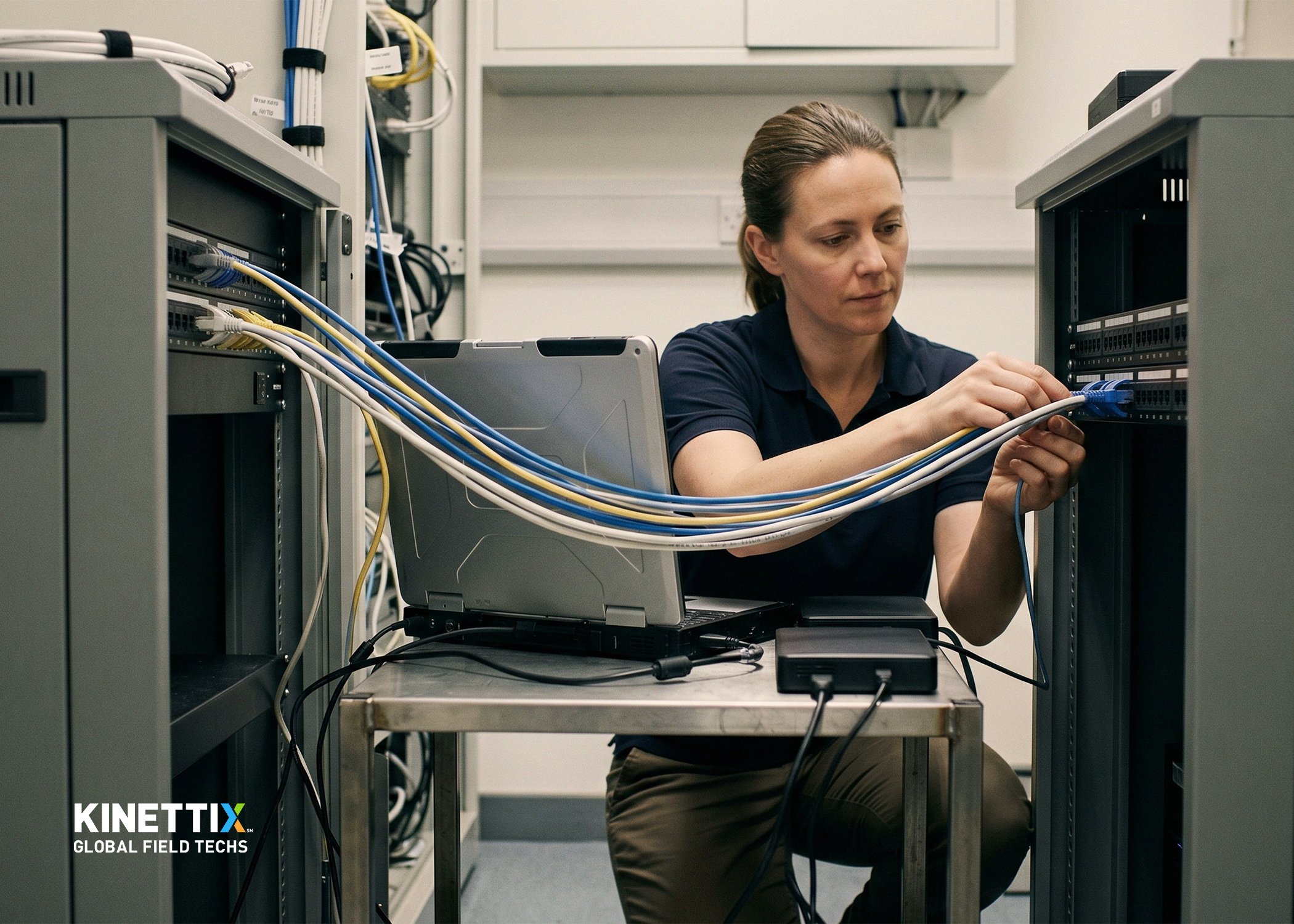
Kinettix supports global deployment of POS systems, digital signage, network equipment (routers, switches, SD-WAN), security cameras, kiosks, structured cabling, and IoT devices. The service is hardware and vendor agnostic, meaning your organization is not restricted to specific manufacturers or platforms.
How does real-time visibility reduce deployment risk?
Real-time visibility allows your project management team to monitor technician arrivals, installation progress, and issue escalations as they happen. Kinettix provides this through Dispatch1, which delivers ETAs, site photos, status updates, and closure data. Catching a problem at one site before it repeats across dozens of locations prevents schedule delays and budget overruns.
What staffing model works for large-scale retail rollouts?
Contingent workforce models give you the flexibility to scale field technician resources based on project volume without maintaining a large permanent team. Kinettix offers on-demand coordination and staff augmentation, allowing you to access vetted technicians as project demands fluctuate across regions and seasons.