

In today's global marketplace, many companies - from SMBs to Enterprise - find themselves needing to deploy IT Field Services across a large geographic footprint.
- For these companies, the question is how to deploy these services: do they deploy them with full-time employees?
- Do they use contingent labor?
- Or is the right answer a hybrid approach?
This blog will address the particular strengths and weaknesses of each deployment model and help organizations make the necessary decisions to deploy IT Field services at scale throughout their organization.
The Challenges of IT Field Services Using Contingent Labor

Being able to deploy IT Field Services globally has become table stakes for organizations that have technical needs, both internal and external, throughout their domain.
While the need to perform reliable IT Field Services has become almost a commodity, how to do it continues to present unique challenges, all dependent on the scope, geography and particular size of the organizations. Some of those challenges, and their accompanying specifics, follow below:
- Outcome Management
At its most basic level, companies deploy IT Field Services to accomplish goals and achieve outcomes. Here at Kinettix, we refer to that goal as "Outcome Management."
We work to understand what companies are looking to accomplish and then design a service offering focused not on just supplying labor or project management but combining those functions in the right ratios to deliver the outcomes the customer is looking for. In this way, our process is demonstrably different from how most of the competition operates.
- Cost Efficiency
Organizations face mounting pressure to control expenses while maintaining high-quality service delivery across multiple locations. Traditional full-time staffing models create fixed costs that don't flex with actual service demand, leading to either overstaffing during slow periods or resource shortages during peak times.
Contingent labor offers the flexibility to scale resources up or down based on project requirements, but requires sophisticated vendor management and quality control systems to ensure consistent customer satisfaction.
- Personnel Scarcity
IT Field Services resources are hard to find and, year after year, they are only getting rarer and rarer. The established workforce is aging quickly with over 30% of the workforce expected to retire in the next 10 years. 4 million older workers have left the workforce since 2020, of which 80% were over 65.
The number of new workers into field services roles is lower than those retiring, which creates a talent gap.
- Managing Large Sums of Data
Field service management generates massive volumes of operational data across every technician dispatch, equipment installation, and maintenance activity. Organizations struggle to capture, organize, and analyze information from multiple sites effectively.
Without robust data management infrastructure, companies lose opportunities to optimize operations, identify patterns, and make informed decisions about resource deployment.
- Project Management
Coordinating field service activities across multiple locations demands exceptional project management capabilities. Each site may present unique requirements, environmental constraints, and scheduling challenges that require careful planning and execution.
Successful field service operations require sophisticated coordination mechanisms that ensure every team member understands their role and has access to necessary resources.
- Customer Experience
Organizations recognize that field service interactions significantly impact overall customer satisfaction and retention. Field technicians often serve as the primary point of contact between a company and its clients, making every on-site visit an opportunity to strengthen or damage relationships.
Companies must ensure their field service operations consistently deliver reliable support that meets or exceeds customer expectations across all client locations.
Why do Companies With IT Support Services Thrive? 7 Benefits That Make it a No-Brainer

There are seismic shifts going on in the technology industry overall today that will have a dramatic effect on how companies deploy and manage IT Field Services, and why and when partnerships are needed.
Artificial Intelligence (AI) is turning the industry on its head by providing a mechanism to increase revenue per employee, while at the same time improving the quality of work by automating and improving processes that were previously done manually.
IT practitioners who don't have a plan for immersing AI into their Field Services offering won't be able to determine what partnerships they need because they won't know what efficiencies are achievable internally before deciding what external help is needed.
How can companies prevent that? Consider the following points:
- Expert AI Streamlining
Artificial intelligence transforms field service operations by predicting equipment failures before they occur, optimizing technician routing, and automating routine tasks that previously consumed valuable time. AI-powered dispatch systems match the right field technicians with specific jobs based on skill set, location, and availability, maximizing efficiency across the entire service delivery network.
Organizations partnering with AI-enabled field service management companies gain immediate access to these advanced capabilities without the extensive development costs and learning curve associated with building them internally.
- Increased Productivity
Field service partnerships eliminate the administrative burden that typically consumes significant portions of internal IT teams' time and energy. External providers handle technician recruitment, background checks, credentialing, and ongoing training programs, freeing internal resources to focus on strategic initiatives.
These operational efficiencies translate directly into faster problem resolution, shorter project timelines, and improved resource utilization across the organization.
- Better IT Decision to Grow Your Business
Partnering with experienced field service management companies provides access to extensive knowledge accumulated across hundreds of deployments and thousands of technician interactions. These organizations understand which technologies work reliably in different environments, which vendors deliver consistent quality, and which approaches yield optimal results for specific types of installations.
The insights gained from managing complex projects across various industries help companies develop more effective technology strategies aligned with their growth objectives.
- Access to Expert Solutions
Specialized field service providers maintain relationships with leading technology vendors and possess deep knowledge of diverse systems and equipment. Their field technicians regularly work with the latest computer hardware, network infrastructure, and enterprise software solutions, building expertise that would be difficult for individual companies to replicate.
Organizations gain access to specialists familiar with legacy systems as well as emerging technologies, ensuring continuity during technology transitions.
- Meeting Tighter Deadlines
Field service partners maintain extensive networks of qualified technicians capable of responding quickly to urgent needs across multiple sites. Their established infrastructure enables rapid deployment when businesses face time-sensitive installations, emergency repairs, or aggressive rollout schedules.
Their experience managing simultaneous deployments across different locations helps ensure that critical deadlines are met without sacrificing quality or safety standards.
- Geographic Scalability
Organizations expanding into new markets or managing distributed operations benefit enormously from field service partnerships that provide consistent support across remote locations. Establishing company-owned service capabilities in every region where infrastructure exists creates prohibitive costs and complexity.
Field service partners leverage existing technician networks to deliver reliable support regardless of location, ensuring that facilities in smaller markets receive the same quality of service as those in major metropolitan areas.
- Risk Mitigation
Partnering with established field service management companies transfers significant operational risk away from internal organizations. These providers carry appropriate insurance, manage worker's compensation issues, and assume liability for service quality and technician conduct.
Their experience navigating diverse client environments and technical challenges reduces the likelihood of project failures or service disruptions that could damage customer relationships or business operations.
Optimize Your Field Service Operations Through Partnership?
The complexity of modern IT infrastructure demands field service capabilities that few organizations can efficiently maintain entirely in-house. Strategic partnerships provide the flexibility, expertise, and scalability necessary to deliver exceptional service delivery across multiple locations while controlling costs and managing risk effectively.
Kinettix combines extensive technical knowledge with sophisticated field service management systems designed to optimize every aspect of your operations.
Reach out now to discover how our field service solutions can transform your infrastructure support capabilities and drive better results across your organization.
9 Key Steps to Superior IT Field Services: Your Trajectory for Success
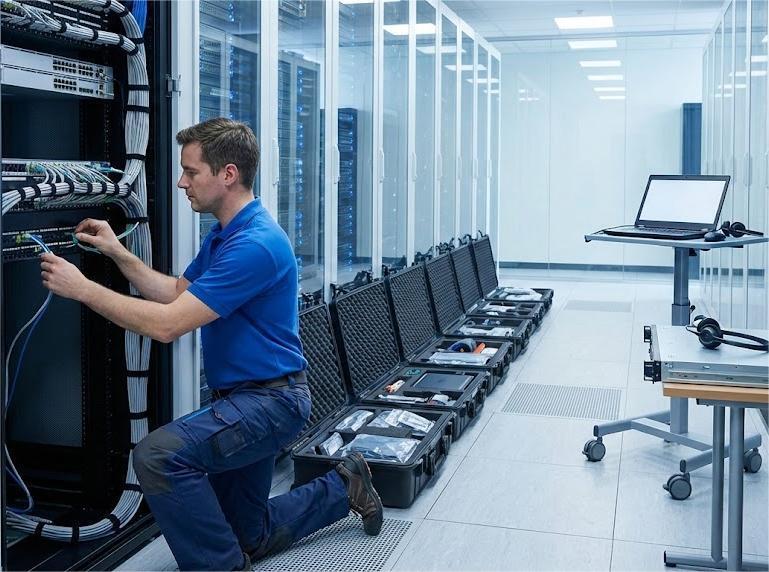
Comprehensive field service operations encompass a wide range of technical capabilities designed to keep infrastructure running reliably and efficiently. Understanding these core service categories helps organizations evaluate providers and ensure their field service operations cover all critical needs.
- Installation
New equipment deployment requires careful planning, technical expertise, and attention to detail that ensures systems function correctly from day one. Field technicians coordinate with stakeholders to schedule installations that minimize business disruption while meeting project timelines.
Professional installation services ensure that computer hardware, network devices, and enterprise systems are expertly installed according to manufacturer specifications and industry best practices.
- Hardware Maintenance
Ongoing maintenance keeps equipment operating at peak efficiency and extends useful life by addressing minor issues before they escalate into major failures. Field service technicians perform preventive maintenance procedures recommended by manufacturers, including cleaning, component inspection, firmware updates, and performance verification.
Regular maintenance schedules tailored to specific equipment types and usage patterns help organizations avoid unexpected downtime and budget for technology refresh cycles appropriately.
- Network Integration
Modern business operations depend on seamless network connectivity that enables communication, data access, and application performance across distributed infrastructure. Field technicians configure routers, switches, firewalls, and other network equipment to integrate new systems into existing environments without disrupting ongoing operations.
Network integration services ensure that new equipment communicates properly with existing systems, security policies are enforced consistently, and performance meets business requirements.
- Troubleshooting
Technical issues inevitably arise in complex IT environments, requiring skilled field technicians who can diagnose problems quickly and implement effective solutions. Troubleshooting encompasses identifying root causes rather than merely addressing symptoms, ensuring that fixes resolve issues permanently instead of temporarily. Break-fix services minimize downtime and maintain customer satisfaction by responding promptly to equipment failures and service disruptions.
- Cabling
Physical infrastructure forms the foundation for reliable network performance and equipment connectivity throughout facilities. Field technicians install structured cabling systems that support current needs while providing capacity for future growth. Professional cabling services ensure that installations meet industry standards for signal quality, physical protection, and fire safety.
- Physical Security
Protecting IT infrastructure from unauthorized access, environmental hazards, and physical damage requires thoughtful security implementations. Field service technicians install access control systems, surveillance cameras, environmental monitoring equipment, and physical barriers that safeguard critical infrastructure.
Physical security services help organizations comply with regulatory requirements, protect sensitive data, and maintain operational continuity in the face of various threats.
- On-Site Installation & Configuration
System deployment extends beyond basic hardware installation to include detailed configuration that aligns new technology with specific business requirements. Field technicians configure operating systems, application software, security settings, and integration parameters according to documented standards.
On-site services ensure that equipment is expertly installed and ready for productive use when turned over to operations teams.
- Site Surveys
Effective infrastructure planning begins with thorough site assessments that identify requirements, constraints, and opportunities before equipment arrives. Field technicians conduct physical surveys to measure spaces, verify power and cooling capacity, assess existing cabling infrastructure, and document any conditions that might affect installations.
Site survey data enables organizations to make informed decisions about equipment selection, installation approaches, and necessary facility modifications.
- Remote Support Coordination
While field service operations focus on on-site activities, effective delivery requires coordination with remote support teams that provide technical guidance and access to specialized resources. Field technicians maintain communication with command centers that monitor job progress, adjust schedules dynamically, and dispatch additional resources when needed.
This coordination ensures that technicians arrive prepared with correct parts, appropriate tools, and necessary information to complete jobs efficiently during initial visits.
2 Compelling Service Delivery Case Studies to Consider
Real-world examples demonstrate how strategic field service partnerships deliver measurable business value across diverse scenarios and organizational requirements:
-
Quick Service Restaurant Menu Board Deployment
A digital merchandising solutions provider needed reliable field service support for drive-thru menu board installations across quick service restaurants nationwide. Their previous approach created significant downtime at client locations, impacting both customer experience and operational efficiency. The client required rapid response capabilities combined with specialized technical expertise for each dispatch.
Kinettix's Solution
Kinettix deployed its proprietary Dispatch1 system to manage all service requests and coordinate resources efficiently. The solution combined IT field technicians and licensed electricians for each site visit, ensuring comprehensive technical coverage. A dedicated project coordinator managed all logistics, resources, and communication channels throughout the engagement.
Execution
Kinettix established comprehensive dispatch protocols that covered every aspect of service delivery. Field technicians and electricians were sourced, vetted, and briefed before each assignment to ensure proper preparation. The team coordinated equipment delivery, managed replacement parts logistics, and monitored weather conditions to optimize scheduling. Daily performance reports kept stakeholders informed throughout the project lifecycle.
End Results
The partnership grew from 5-6 weekly dispatches to over 20 weekly requests based on consistent performance. Kinettix achieved high completion rates while minimizing downtime at restaurant locations. The client implemented Salesforce integration with Dispatch1 to further streamline operations. This relationship became Kinettix's largest dispatch engagement, demonstrating scalability and service quality.
-
Multi-Site Wireless Infrastructure Upgrade
A major U.S. bank with over 1,000 locations needed to upgrade wireless infrastructure across its entire network. The organization required comprehensive site surveys, access point installations, and post-deployment validation to ensure optimal network performance. The project demanded coordination across multiple states while maintaining banking operations without disruption.
Kinettix's Solution
Kinettix provided Ekahau-certified engineers to conduct predictive surveys at 150-200 sites, identifying optimal access point placement and quantities. The team delivered detailed survey reports for client approval before scheduling installation visits. Remote project management coordinated highly qualified field resources across all locations while maintaining strict quality standards.
Execution
Field technicians conducted on-site surveys using professional-grade equipment to map wireless coverage requirements. Installation teams deployed Cisco wireless access points according to approved specifications and mounting locations. The team documented each installation with photographic evidence and confirmed equipment functionality before completing work. Selected sites received post-installation validation surveys to verify performance met design specifications.
End Results
Kinettix delivered 100% fulfillment of the client's WiFi cutover and refresh schedule across all targeted locations. The structured approach enabled the bank to modernize its wireless infrastructure without operational disruptions. The client praised Kinettix for flexibility with scope changes and consistently responsive service delivery.
Your 5 Questions About IT Field Services, Answered

Organizations evaluating IT field services partnerships often have similar questions about service delivery, resource management, and operational expectations. These frequently asked questions address the most common concerns we encounter from clients seeking reliable field service solutions.
- How quickly can field service technicians respond to emergency situations?
Response times vary based on location, service level agreements, and technician availability in specific regions. Most field service management companies offer multiple service tiers ranging from next-business-day to four-hour response guarantees.
Organizations should discuss specific response time requirements during contract negotiations to ensure service levels align with business needs and budget constraints.
- What qualifications should field service technicians possess?
Qualified field technicians typically hold industry certifications relevant to the technologies they support, such as network equipment manufacturer credentials, cabling certifications, or specialized training on specific systems. Beyond technical knowledge, successful technicians demonstrate strong problem-solving abilities, excellent communication skills, and professional conduct appropriate for client-facing roles.
Organizations should verify that providers maintain rigorous quality standards and can supply technicians with appropriate skill sets for specific project requirements.
- How do field service partnerships handle inventory management for spare parts?
Effective field service operations require careful inventory management that ensures critical components are available when needed without maintaining excessive stock that ties up capital. Leading providers use sophisticated systems that track part consumption patterns, predict demand based on equipment populations and failure rates, and position inventory strategically across service regions.
The optimal approach depends on equipment types, failure frequency, and cost considerations unique to each organization.
- Can field service providers support legacy systems alongside new technology?
Experienced field service companies maintain extensive knowledge bases covering both current technologies and legacy systems that many organizations continue operating. Their technicians regularly encounter diverse equipment across different client environments, building expertise that spans multiple technology generations.
Organizations should verify that field service partners possess specific expertise relevant to their particular mix of systems rather than assuming all providers offer equivalent capabilities.
- What metrics should organizations use to evaluate field service performance?
Key performance indicators for field service operations typically include first-time fix rates, average resolution time, customer satisfaction scores, schedule adherence, and technician utilization rates. Organizations should also track total cost per ticket, inventory turnover, repeat service calls for the same issues, and compliance with service level agreements.
Regular performance reviews with field service partners should examine trends over time and identify opportunities to optimize operations and enhance customer experience.
Ready to Experience Seamless Integration & Support? Reach Out Today

Organizations face increasingly complex challenges managing IT infrastructure across multiple locations while controlling costs and maintaining high service quality. Strategic partnerships with experienced field service management companies provide the expertise, scalability, and operational excellence necessary to overcome these obstacles. Kinettix delivers comprehensive field service solutions designed around your specific business objectives and operational requirements.
Contact us today to discuss how our field service capabilities can transform your infrastructure support operations and help your business thrive in today's demanding technology environment.