

To keep your technology ecosystem running at peak efficiency, reactive troubleshooting can only do so much. For true adaptation and sustainability, your business demands a structured approach to IT maintenance and support services.
As organizations scale, their operating environments become more complex, stretching internal teams and increasing the likelihood of unexpected technical issues. A proactive maintenance partner helps close these gaps by delivering the specialized expertise, performance monitoring, and technical assistance needed to keep software running smoothly across global operations.
Modern infrastructures rely on layers of applications, operating systems, networks, and devices. When even one component falters, productivity slows and customer experiences suffer.
Regular IT maintenance allows teams to:
- identify risks early
- stabilize system performance
- avoid data loss caused by outdated configurations or missed security protocols
Predictive and corrective maintenance practices ensure that bug fixing, updates, patches, and optimizations occur on a consistent schedule, reducing the pressure on your in-house support team and preventing unexpected downtime that derails critical workflows..
By partnering with experts who understand the demands of globally distributed environments, your business can unlock higher uptime, sharper operational agility, and a dramatically stronger foundation for long-term growth.
Hardware vs Software: How IT Maintenance Services Reinforce Your Network in Both Areas
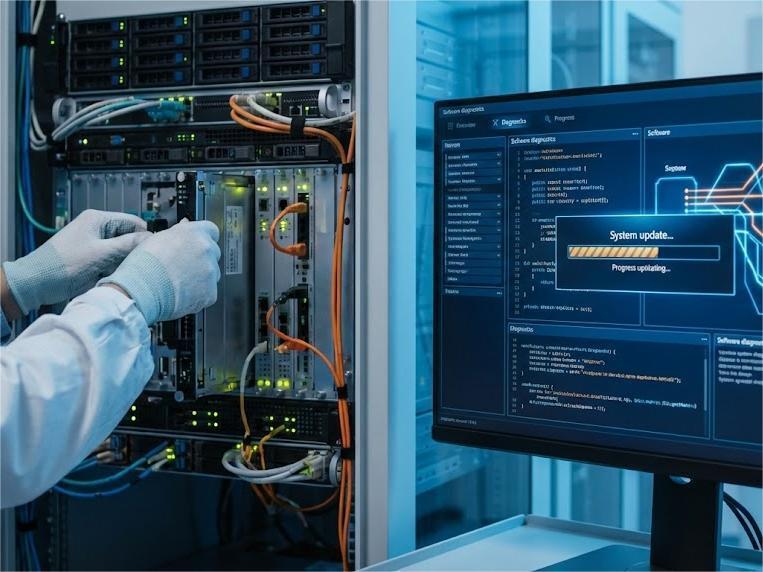
Modern IT ecosystems rely on a seamless relationship between hardware infrastructure and the software that powers daily operations.
Effective IT maintenance and support services strengthen both layers, ensuring system reliability, minimizing downtime, and keeping your business aligned with core performance goals. When either side is neglected, organizations face unexpected technical issues that disrupt workflows, impact customer data, and drain internal resources.
Proactive and regular IT maintenance prevents these challenges by stabilizing your environment through performance monitoring, bug fixing, and enhanced security measures that address vulnerabilities before they escalate.
A balanced maintenance strategy ensures your technology stack works as a unified whole, supporting long-term business objectives while enabling teams to operate confidently.
Hardware- Physical infrastructure such as servers, switches, firewalls, storage arrays, end-user devices forms the backbone of your operating environment.
- Proper maintenance includes component testing, firmware updates, thermal and power monitoring, lifecycle planning, and predictive maintenance to prevent failures that cause unexpected downtime.
- Support teams also handle corrective maintenance when hardware shows signs of degradation, ensuring minimal disruption to business continuity.
- By partnering with a maintenance provider equipped for global field operations, organizations can keep mission-critical hardware stable, secure, and optimized.
- Your software layer includes operating systems, virtualization tools, productivity suites, cloud applications, security platforms, and custom business software.
- Supporting this stack involves regular patching, bug fixing, performance optimization, license management, and monitoring for vulnerabilities that could lead to data loss or data breaches.
- Proactive maintenance ensures software runs smoothly, meets compliance requirements, and adapts to evolving business needs.
- With the right support team, organizations can resolve technical issues faster and maintain consistent system performance across global users.
5 Internal Challenges to Proper IT Maintenance & Support
Even well-staffed IT departments face structural obstacles that make it difficult to deliver consistent, high-quality maintenance across complex environments.
As systems evolve and business objectives expand, internal limitations can undermine system reliability, increase unexpected downtime, and expose the organization to security risks. Understanding these challenges is the first step toward building a maintenance strategy that strengthens both performance and protection.
- Limited Technical Expertise Across Critical Systems
Modern operating systems, cloud platforms, and security tools evolve rapidly, leaving internal teams struggling to maintain specialized expertise. This skill gap makes resolving technical issues and ensuring optimal performance more difficult. Without continuous training or external support, teams can fall behind on emerging best practices that improve long-term system health. - Inadequate Tools for Predictive or Proactive Maintenance
Without advanced monitoring platforms or analytics, IT teams remain stuck in reactive mode. They can address failures only after they occur instead of preventing unexpected downtime through proactive maintenance. This lack of visibility also limits their ability to identify subtle performance issues that impact productivity. - Budget Constraints and Rising Maintenance Fees
Organizations often delay upgrades, tool investments, or training because of budget pressures. Over time, this leads to corrective maintenance that is more costly and disruptive. These constraints also restrict access to the specialized expertise needed for complex environments. - Inconsistent or Outdated Security Protocols
When security updates and patches fall behind schedule, vulnerabilities accumulate across systems. This dramatically increases the risk of data breaches, data loss, and compliance violations. Without a structured update cadence, even small oversights can create significant exposure. - Overwhelmed Support Teams Managing Daily Ticket Volume
Heavy ticket queues force internal help desks to prioritize quick fixes over essential tasks like bug fixing, performance monitoring, and system optimization. As a result, long-term system reliability declines. High-volume desk services also contribute to burnout, reducing the team's ability to deliver reliable support.
What are the Risks? 5 Reasons Why Regular IT Maintenance is Essential for System Reliability
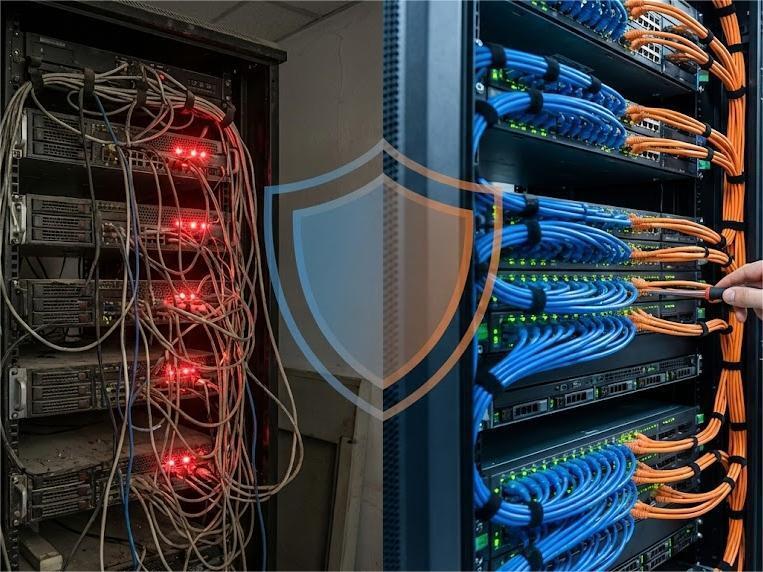
A stable, high-performing IT environment doesn’t happen by accident, it’s the result of consistent, proactive maintenance that keeps systems operating smoothly and securely.
As infrastructures grow more complex and organizations become increasingly dependent on digital tools, the value of consistent IT maintenance becomes even more critical. These practices help minimize disruption, strengthen security, and support long-term business objectives while ensuring teams can operate with confidence across all environments.
- Prevents Unexpected Downtime
Routine maintenance identifies weak points before they escalate into outages, helping organizations avoid costly disruptions. By addressing issues proactively, businesses maintain continuity and protect productivity across teams. This predictability allows leaders to plan with confidence instead of reacting to surprise failures.
- Supports System Health and Performance
Regular updates, tuning, and performance monitoring ensure operating systems and applications remain stable under daily workloads. This ongoing care keeps critical platforms responsive and aligned with evolving business needs. Over time, this leads to smoother operations and fewer performance bottlenecks across the organization.
- Strengthens Security Against Data Breaches
Up-to-date security protocols, patches, and monitoring tools reduce the risk of data breaches and data loss. Continuous maintenance closes vulnerabilities and reinforces protections for customer data and sensitive systems. With cyber threats increasing, this intentional approach becomes essential for maintaining compliance and trust.
- Identifies and Resolves Technical Issues Early
Early detection makes resolving technical issues faster and less disruptive. This prevents minor glitches from developing into system-wide inefficiencies or failures that impact operations. As a result, support teams spend less time firefighting and more time supporting strategic initiatives.
- Keeps Software Running Smoothly Across Distributed Teams
With remote and hybrid work models, software must perform reliably across varied devices and networks. Regular maintenance ensures consistent user experience and reduces strain on internal support teams. This stability empowers distributed employees to stay productive without relying on frequent troubleshooting.
From Reactive to Resilient: Why Industry Leaders Are Actively Investing in Future-Ready IT Maintenance and Support Services
Today’s most successful organizations aren’t waiting for systems to break before taking action, they’re prioritizing proactive IT maintenance and support services that strengthen system reliability and safeguard customer data.
As hybrid infrastructures become standardized and operations accelerate, reactive support models simply can’t keep pace. Industry leaders know that future-ready maintenance strategies deliver measurable gains in performance, security, and cost efficiency, helping them stay aligned with business objectives while adapting quickly to change.
If your team is tired of firefighting recurring issues or navigating the risks of outdated systems, now is the time to shift toward a more resilient approach. Partnering with experts who excel in global field operations and performance monitoring gives you the reliable support needed to keep software running smoothly and maintain system health across all environments.
Take the next step toward stronger, safer, and more scalable IT operations: connect with our team today and start building the foundation your business needs to grow with confidence.
Third Party Maintenance vs. In-House Support Services: What to Consider
Choosing between third-party maintenance and in-house support services requires a clear understanding of how each model contributes to system reliability, cost efficiency, and long-term performance.
- Third-party teams typically offer broader specialized expertise, access to advanced performance monitoring tools, and more predictable maintenance fees, making them a strong option for organizations seeking scalable, proactive maintenance across diverse operating systems and global environments.
- In-house teams, by contrast, provide immediate familiarity with internal workflows and daily processes, which can be valuable for localized troubleshooting or rapid desk services.
By weighing these strengths side by side, business leaders can determine which approach better aligns with their operational demands, security requirements, and long-term business objectives.
|
Capabilities |
Third-Party Team |
In-House Team |
|
Specialized Expertise Across Multiple Systems |
✅ |
🚫 |
|
Cost-Effective Solution with Predictable Maintenance Fees |
✅ |
🚫 |
|
Advanced Tools for Performance Monitoring and Predictive Maintenance |
✅ |
🚫 |
|
On-Site Familiarity With Systems and Workflows |
🚫 |
✅ |
Start Solving Today’s Problems with Corrective Support & Preventative Maintenance
A resilient IT environment necessitates a maintenance strategy that addresses immediate issues while actively preventing new ones from emerging. Corrective support and preventative maintenance work hand-in-hand to strengthen system reliability, minimize downtime, and protect the long-term health of your infrastructure.
By balancing these two disciplines, organizations ensure that their technology stays aligned with evolving business objectives while reducing the operational strain on internal teams. Together, they create a support model that catches problems early, resolves technical issues quickly, and keeps software running smoothly across all environments.
- Corrective Support
Corrective support provides the rapid, on-demand troubleshooting organizations need when unexpected technical issues occur. Problems are inevitable. Hardware components fail, applications freeze, and network disruptions surface without warning.
A strong corrective support framework ensures minimal downtime by quickly identifying root causes and restoring systems to optimal performance. This immediate response capability protects productivity and gives teams confidence that help is available whenever they need it.
- Preventative Maintenance
Preventative maintenance focuses on strengthening system health before problems take shape. By conducting regular updates, performance monitoring, security patching, and proactive maintenance, organizations diffuse issues long before they disrupt workflows.
This disciplined approach reduces long-term costs, supports system reliability, and enhances overall security by closing vulnerabilities early. With preventative maintenance in place, businesses can operate more efficiently and stay ahead of emerging technical challenges.
6 Proactive Strategies to Prevent Future Disasters

Future-ready organizations know that the best way to protect their IT infrastructure is to prevent issues before they disrupt business operations. Proactive and predictive approaches strengthen IT systems by addressing weak points early, optimizing performance, and reducing support costs associated with emergency repairs.
Through structured preventive maintenance and ongoing support, service providers can help businesses maintain business continuity even as their environments scale or become more complex. These strategies not only minimize downtime but also enhance operational efficiency by ensuring that every part of your network infrastructure, from hardware assets to software layers, operates at optimal performance.
- Performance Monitoring and System Health Checks
Regular monitoring gives teams visibility across critical IT systems, helping them identify abnormalities early. By reviewing system health trends, organizations can strengthen network infrastructure and prevent system downtime. This level of proactive monitoring also helps service providers forecast resource needs before they affect business operations. - Regular IT Maintenance and Bug Fixing
Consistent maintenance tasks ranging from patch management to software maintenance ensure applications remain stable and secure. This reduces long-term support costs and keeps IT services aligned with business needs. When proper maintenance is performed consistently, organizations benefit from smoother workflows and fewer disruptions to core business processes. - Predictive Analytics to Anticipate Failures
Data-driven insights allow teams to forecast hardware or software failures before they occur. Predictive tools support preventive maintenance and improve business continuity. These insights help IT leaders make better decisions about infrastructure support and future system upgrades. - Security Protocol Audits and Threat Detection
Routine audits help eliminate security vulnerabilities that threaten to disrupt operations or compromise customer data. Implementing robust security measures strengthens the overall IT environment. With regular evaluations, organizations stay ahead of emerging threats that could undermine customer satisfaction or compliance requirements. - System and Software Optimization
Fine-tuning configurations and updating outdated components ensure optimal performance across your IT infrastructure. Optimization also enhances operational efficiency and reduces strain on your dedicated team. This continuous improvement approach allows support and maintenance services to scale alongside business growth. - Rapid Technical Assistance and Desk Support Access
Fast-response technical support ensures technical issues are resolved before they escalate into major disruptions. This level of ongoing support and maintenance services helps organizations operate efficiently and minimize downtime. With immediate access to skilled technicians, businesses can maintain stable operations even during high-demand periods.
2 Real Life Examples: How Proactive IT Support Services Improved This Global Enterprise's System Reliability & Performance
Proactive support models don’t just fix issues but stabilize IT environments, streamline business operations, and protect organizations from costly disruptions. The following examples show how Kinettix’s maintenance-centric approach helped global clients achieve higher reliability and smoother system performance.
Case Study 1: PC Rollout Project
Background & Objectives
A rapidly expanding enterprise required remote installation support across hundreds of geographically distributed sites. Their internal IT team lacked the bandwidth to troubleshoot installations, validate system performance, and maintain business continuity across multiple time zones. They needed a service provider capable of delivering real-time technical guidance to prevent configuration errors before systems went live and to ensure consistent quality across every location.
Kinettix Solution
Kinettix delivered a remote-support framework designed to give field technicians instant access to expert assistance during installations. Remote Installation Engineers (IEs) validated camera functionality, confirmed mounting locations, supported configuration steps, and handled escalations directly. This approach functioned as a proactive maintenance layer, reducing technical issues, preventing repeat visits, and strengthening the reliability of deployed systems.
Implementation Highlights
- Delivered real-time remote installation support to prevent misconfigurations and reduce repeat truck rolls.
- Built tools, installation guides, and digital workflows to standardize execution.
- Validated hardware maintenance and software configuration accuracy before sign-off.
- Coordinated technician engagement with clear escalation and verification procedures.
Results & Cost Savings
The remote install support program significantly reduced downtime by helping technicians resolve issues at the moment of installation rather than after devices were deployed incorrectly. This accelerated successful installations, enhanced operational efficiency, and lowered support costs by reducing unnecessary dispatches and troubleshooting.
Case Study 2: Remote Install Support
Background & Objectives
A global technology company faced a massive PC refresh spanning multiple campuses and remote users. With tight timelines and thousands of devices requiring imaging, configuration, and verification, they needed a structured rollout process that ensured accuracy, minimized downtime, and maintained consistent performance standards across every site.
Kinettix Solution
Kinettix deployed skilled field engineers trained on standardized imaging, configuration, and patching workflows. By integrating proactive monitoring, documented processes, and system validation steps throughout the deployment, Kinettix ensured each device was properly prepared, shipped, installed, and integrated into the client’s IT infrastructure, reducing variability and improving long-term reliability.
Implementation Highlights
- Implemented standardized imaging, patch management, and configuration processes across thousands of devices.
- Ensured each deployment met rigorous hardware maintenance and software maintenance criteria.
- Coordinated technician scheduling, dispatch, and resource allocation across all locations.
- Maintained consistent verification protocols, reducing issues after rollout.
Results & Cost Savings
Kinettix enabled the client to complete a complex, large-scale PC rollout on schedule with minimal operational disruption. By ensuring accurate configuration from day one, the client avoided later maintenance overruns, reduced the impact on end users, and extended the lifecycle of their endpoint equipment, ultimately lowering long-term support costs and improving system stability.
Need A Trustworthy Maintenance Partner for Growing Businesses? Consider Kinettix

As your IT infrastructure expands and your systems become more interconnected, a dependable maintenance and support partner becomes essential.
Kinettix delivers the proactive monitoring, preventive maintenance, and global field coverage modern organizations need to:
- protect business continuity
- minimize downtime across every location they operate
Whether you're managing distributed networks, rolling out new hardware, or optimizing software maintenance processes, our dedicated team provides the consistency, responsiveness, and technical expertise that growing businesses rely on to operate efficiently.
Choosing Kinettix means gaining a service provider that strengthens system reliability today while preparing your IT environment for tomorrow’s challenges. From resolving complex technical issues to implementing robust security measures and improving operational efficiency, our support services ensure your teams can focus on innovation instead of troubleshooting.
If you're ready to elevate your maintenance strategy and build an IT foundation engineered for long-term performance, connect with us today and discover how Kinettix can help your business scale with confidence.