
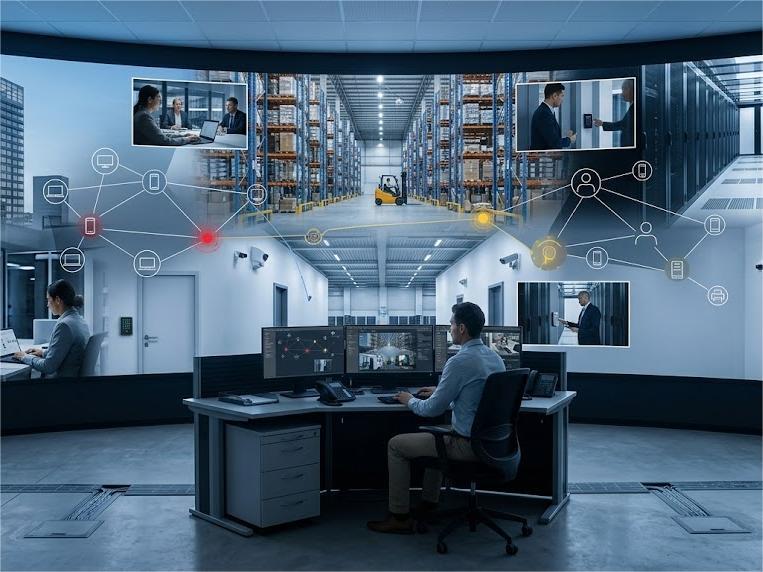
Enterprise security systems are facing more and more pressure to perform across more surfaces at once. Large organizations are managing distributed physical locations, expanding IoT device footprints, remote workforces, and increasingly sophisticated cyber threats, all while trying to maintain a unified security posture that doesn't collapse under its own complexity.
Verkada's cloud-native platform gives enterprises the tools to unify physical and digital security under one roof, and Kinettix provides the field services infrastructure to deploy it at scale, across every facility, with consistent results.
The table below is a quick-reference self-assessment to identify where your enterprise security architecture stands today and where the gaps are that attackers are most likely to exploit first.
|
Security Area |
Critical |
Weak |
Strong |
|
Identity & Access Management |
No MFA or formal IAM policy in place |
MFA partially deployed or inconsistently enforced |
MFA enforced across all users and locations |
|
Endpoint Protection |
Endpoints unmonitored or unmanaged |
Signature-based antivirus only |
AI-powered detection and response on every endpoint |
|
Network Segmentation |
Flat network with no segmentation |
Partial segmentation with known gaps |
Network segmented by department, device type, and risk level |
|
Physical Access Control |
No electronic access control in place |
Access control at some locations but not standardized |
Unified access control across all facilities with audit logs |
|
Video Surveillance Coverage |
No video surveillance in place |
Cameras present but limited coverage or no analytics |
AI-powered CCTV with full facility coverage and real-time alerts |
|
Firewall & Intrusion Detection |
No firewall or outdated legacy rules |
Basic firewall with no intrusion detection |
NGFW with deep packet inspection and active monitoring |
|
IoT Device Management |
IoT devices on network with no oversight |
Some IoT devices tracked but not fully secured |
All IoT devices inventoried, segmented, and monitored |
|
Vulnerability Management |
No vulnerability management program |
Occasional patching with no formal cadence |
Regular audits and patching on a defined schedule |
|
Incident Response Plan |
No formal incident response plan |
Plan exists but has not been tested |
Documented, tested, and regularly updated |
|
Security Across Remote Workers |
Remote workers operating outside security perimeter |
Partial remote security policies in place |
Enforced security policies for all remote endpoints and connections |
What Are the 7 Most Common Gaps in Enterprise Security Architecture (That Attackers Count On)?
Most enterprise security breaches don't happen because attackers are smarter than your security team. They happen because predictable, well-documented gaps in security architecture go unaddressed long enough for someone to exploit them. The seven vulnerabilities below are the ones that sophisticated attackers consistently count on finding inside large organizations:
- Siloed Security Tools With No Cross-System Visibility
Security tools that don't communicate with each other create blind spots that no individual platform can see across. When physical access control, endpoint detection, and network monitoring operate as isolated systems, threats that move between those layers go undetected until the damage is already done.
- Unmanaged IoT Devices on the Organization's Network
Every unmanaged IoT device on your network is an open door that most organizations don't even know exists. Attackers routinely use printers, HVAC controllers, cameras, and other connected devices as entry points to gain a foothold on the broader organization's network.
- Inconsistent Access Credentials Across Locations
When access credential standards vary from site to site, the weakest location in your portfolio sets the security floor for the entire organization. A single facility running outdated or loosely enforced credential policies can expose the entire enterprise to intrusion through lateral movement.
- No Real-Time Threat Detection on Endpoints
Endpoints that aren't actively monitored for anomalous behavior are invisible to your security teams until something has already gone wrong. Real-time threat detection at the endpoint level is the difference between catching an intrusion in progress and discovering a breach weeks after the attacker has moved on.
- Outdated Firewall Rules That Haven't Kept Pace With the Attack Surface
Firewall rules configured for a network that no longer resembles your current environment create gaps that attackers map and exploit systematically. As cloud adoption, remote work, and IoT expansion have reshaped the modern enterprise network, firewall configurations that haven't kept pace become an increasingly reliable vulnerability.
- Remote Workers Operating Outside the Security Perimeter
Remote workers connecting through unsecured home networks or personal devices extend your attack surface in ways that legacy perimeter security cannot address. Without enforced security policies that follow the user rather than the location, every remote connection is a potential breach vector.
-
Insufficient Authentication Requirements for High-Privilege Access
High-privilege accounts with weak or single-factor authentication are among the most targeted credentials in any enterprise environment. An attacker who gains access to a privileged account can move laterally across systems, escalate permissions, and exfiltrate data long before any alert is triggered.
Which 9 Pillars Are Required for a Bulletproof Enterprise Security Architecture?

A strong enterprise security solution doesn't come from any single product or policy. It comes from building a layered architecture where each component reinforces the others, closing the gaps that individual tools leave behind. The nine pillars below form the foundation of a security architecture that can withstand the threat landscape enterprises face today:
- Identity and Access Management (IAM)
IAM is the enforcement layer that ensures only the right people can access the right systems, at the right time, under the right conditions. Without a formal IAM framework in place, access credentials become one of the most reliable tools in an attacker's arsenal.
-
Next-Generation Firewalls With Deep Packet Inspection
Next-generation firewalls go beyond basic traffic filtering by examining the actual content of data packets moving across the organization's network. Deep packet inspection allows security teams to identify and block threats that standard firewalls would pass without flagging.
- Endpoint Detection and Response
Every device that connects to your network is a potential entry point, and endpoint detection and response ensures that each one is actively monitored for indicators of compromise. EDR platforms provide the visibility and automated response capabilities that security teams need to contain threats before they spread.
- AI-Powered Threat Intelligence
AI-powered threat intelligence shifts enterprise security from reactive to predictive by identifying attack patterns before they materialize into active breaches. Machine learning models trained on global threat data allow security teams to prioritize vulnerabilities and respond to emerging risks faster than manual analysis can support.
- Encryption at Rest and in Transit
Data that moves across your network or sits in storage without encryption is accessible to anyone who can intercept it, regardless of what other security controls are in place. Enforcing encryption across all data states ensures that a breach of one system doesn't automatically become a breach of all the information that system touches.
- Physical Access Control Integration
Physical and cyber security operate on the same attack surface, and treating them as separate disciplines creates gaps that sophisticated attackers exploit deliberately. Integrating electronic access control with the broader security architecture ensures that physical intrusion events trigger the same detection and response workflows as digital threats.
- Cloud-Native Security Architecture
Legacy on-premises security infrastructure struggles to keep pace with environments that span multiple locations, cloud platforms, and remote workforces. Cloud-native security architecture provides the scalability, centralized management, and automatic update cadence that distributed enterprise environments require.
- Continuous Vulnerability Management
Known vulnerabilities that go unpatched are responsible for a disproportionate share of enterprise security breaches, and continuous vulnerability management exists to close that window. A formal cadence of scanning, prioritization, and remediation ensures that weaknesses are addressed before attackers have the opportunity to weaponize them.
- Sandboxing for Zero-Day Attack Containment
Zero-day attacks exploit vulnerabilities that have no existing patch or signature, making them invisible to detection tools that rely on known threat databases. Sandboxing creates an isolated environment where suspicious files and processes can be analyzed and contained before they reach production systems.
How Does Verkada Solve Enterprise Security Challenges?
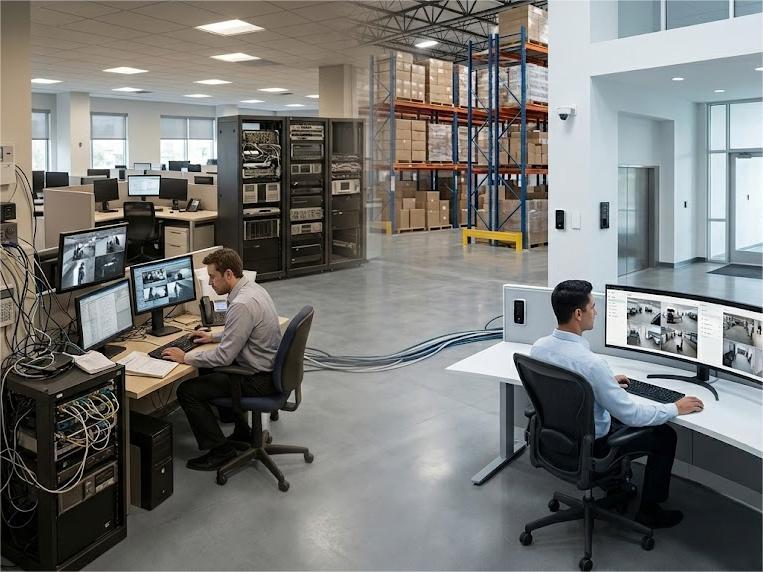
Verkada is a cloud-native enterprise security platform that unifies video surveillance, access control, environmental monitoring, and AI-powered analytics under a single management interface. Large enterprises choose Verkada because it eliminates the infrastructure complexity of traditional security systems while delivering the visibility, scalability, and real-time detection capabilities that distributed organizations require.
Kinettix deploys Verkada systems across enterprise portfolios of any size, bringing the field services coordination, Verkada-certified technicians, and standardized installation methodology to ensure every location comes online with consistent quality. The table below breaks down how Verkada compares to traditional security systems across the features that matter most to enterprise security teams.
|
Feature |
Verkada |
Traditional Security Systems |
|
Cloud-Native Management |
✅ |
❌ |
|
AI-Powered Threat Detection |
✅ |
❌ |
|
Real-Time Alerts |
✅ |
✅ |
|
Remote Access & Management |
✅ |
⚠️ Limited |
|
Automatic Software Updates |
✅ |
❌ |
|
Scalable Across Multiple Sites |
✅ |
⚠️ Complex |
|
Unified Video & Access Control Platform |
✅ |
⚠️ Varies |
|
On-Site Server Infrastructure Required |
❌ |
✅ |
|
Manual Firmware Updates Required |
❌ |
✅ |
|
Integration With Existing IT Infrastructure |
✅ |
⚠️ Limited |
|
Long-Term Hardware Flexibility |
✅ |
⚠️ Varies |
Your Enterprise Security Deployment Deserves a Partner Who's Done This Before
Deploying Verkada enterprise security systems across multiple locations requires more than the right technology. It requires a field services partner with the coordination infrastructure, certified technicians, and proven methodology to execute at scale without sacrificing quality at any single site.
Kinettix has deployed Verkada systems across distributed enterprise portfolios spanning industrial, commercial, and multi-site environments. Reach out now to talk with a deployment specialist about what a standardized, scalable Verkada rollout looks like for your organization.
8 Proven Strategies for Closing the Gaps in Your Business Security Posture
Identifying gaps in your enterprise security architecture is only half the equation. The other half is knowing which strategies close those gaps most effectively and how the right technology accelerates that process across every location in your portfolio. The table below maps each strategy to its operational impact and how Verkada delivers it across distributed enterprise environments.
|
Strategy |
Impact |
Verkada's Solution |
|
Conduct a Full Security Architecture Audit |
Identifies coverage gaps, misconfigured tools, and unmonitored endpoints before attackers do |
Verkada's centralized dashboard provides a unified view of all devices, coverage zones, and access logs across every location |
|
Unify Physical and Cyber Security Under One Management Platform |
Eliminates siloed visibility and gives security teams a single source of truth across all locations |
Verkada combines video surveillance, access control, and environmental sensors into a single cloud-managed platform |
|
Enforce Multi-Factor Authentication Across All Access Credentials |
Closes the single most exploited entry point for credential-based intrusion |
Verkada access control supports mobile credentials, PIN codes, and encrypted key cards with centrally enforced authentication policies |
|
Segment the Organization's Network by Department and Device Type |
Limits lateral movement and contains breaches before they cascade across critical infrastructure |
Verkada devices operate on isolated network architecture, reducing exposure if other network segments are compromised |
|
Deploy AI-Powered Detection at Every Endpoint |
Replaces reactive, signature-based monitoring with real-time threat identification at machine speed |
Verkada cameras use onboard AI to detect motion, intrusion, loitering, and anomalous behavior in real time without manual review |
|
Establish a Formal Vulnerability Management Cadence |
Ensures known weaknesses are patched before they become active attack vectors |
Verkada pushes automatic firmware and software updates across all devices, eliminating manual patching delays |
|
Integrate IoT Devices Into the Broader Security Architecture |
Removes the unmanaged device blind spot that attackers routinely exploit for initial access |
Verkada's cloud-native platform provides full visibility and management of all connected devices from a single interface |
|
Standardize Access Control Policies Across All Physical Locations |
Prevents credential inconsistencies that create unauthorized access opportunities at remote sites |
Verkada enables organization-wide access policy enforcement from a central console, ensuring no location operates outside the defined security standard |
Case Study: Inside a Real Verkada Deployment: What Kinettix Delivered Across a Distributed Industrial Portfolio
A multi-site industrial operator needed to modernize its physical security footprint with Verkada cameras across facilities that varied widely in layout, network readiness, and legacy infrastructure. The core challenge was building a repeatable, scalable deployment model that delivered consistent results at every location without treating each site as a one-off project.
Kinettix's Solution
Kinettix approached the engagement as a scalable deployment program rather than a series of isolated site visits, applying a structured field-services model built for repeatability across a distributed portfolio.
- Standard Work Packages and Repeatable Workflows
Kinettix structured the deployment around consistent work packages that followed the same lifecycle at every site, from pre-visit planning through closeout documentation. This repeatable sequencing ensured that every facility received the same baseline level of diligence regardless of local variables.
- Centralized Coordination to Reduce Site Variability
Multi-site deployments fail when local site conditions drive ad hoc decision-making, and Kinettix countered that by centralizing scheduling, site contact engagement, and expectations-setting across the entire portfolio. Consistent coordination reduces the operational friction that occurs when different facilities interpret requirements differently.
- Exception-Driven Reporting for Structured Deviations
Not every facility is identical, and Kinettix built a reporting model that captured infrastructure gaps and site-specific constraints as documented exceptions rather than allowing them to silently compromise installation quality. This approach preserved program-wide standardization while giving the customer full visibility into any deviations that required follow-up.
- Verkada-Certified Project Managers on Every Site
Kinettix deployed project managers holding Verkada Technical Certifications to oversee installation at each location, ensuring that Verkada best practices were applied consistently across every facility in the portfolio. Certified oversight at the site level was the primary mechanism for achieving uniform installation quality at scale.
Execution
With the deployment model defined, Kinettix executed each site through the same structured five-phase workflow, ensuring no location was treated differently and no step was skipped regardless of site complexity.
- Pre-Visit Alignment and Access Coordination
Kinettix established site access plans and confirmed logistics ahead of each visit so work could begin on time and proceed without delays caused by missing escorts, unclear entry procedures, or uncommunicated restrictions. Reliable starts are critical in multi-site programs where schedule disruptions at one location cascade across the broader rollout timeline.
- Structured Onsite Readiness Checks
Upon arrival at each facility, technicians performed a standardized readiness verification covering network connectivity, PoE availability, mounting surfaces, and cable routing feasibility before any installation began. Standardized readiness checks reduced the probability of partial installs and ensured that Verkada devices were deployed on stable, validated infrastructure.
- Standardized Installation Methods
Kinettix installed all Verkada devices using uniform best practices covering secure mounting, clean cable management, clear labeling, and coordination with onsite stakeholders for access to controlled areas. Consistent methods at every site meant the finished installation looked and performed the same way from facility to facility.
- Functional Verification and Testing
Before closing out each site, Kinettix performed functional validation to confirm that every Verkada device was powered, connected, positioned correctly, and stable for operational use. This step ensured that sites wouldn't require revisits due to preventable setup issues that a thorough verification process would have caught.
End Results
By treating the engagement as a scalable program rather than a collection of individual projects, Kinettix delivered outcomes that gave the customer a security deployment model built for long-term growth.
- A Repeatable Deployment Blueprint
Each site followed a consistent lifecycle from readiness validation through closeout, giving the customer a proven process that can be replicated across new locations without rebuilding the approach each time. The deployment blueprint Kinettix established became a program asset, not just a project deliverable.
- More Predictable Quality Across Facilities
Standardized installation methods and verification steps reduced variability in workmanship, device placement, and post-install troubleshooting across the entire portfolio. Predictable quality at scale is what separates a governed security program from a collection of individually managed site projects.
- Fewer Mid-Deployment Surprises
Early infrastructure gap identification through standardized readiness checks allowed issues to be managed as documented exceptions rather than last-minute discoveries that force rescheduling and rework. Proactive identification preserved both the deployment timeline and the quality of the finished installation.
- Stronger Closeout Documentation
Consistent closeout records captured what was installed, where, how it was verified, and what dependencies remained, giving the customer a usable system of record for ongoing support and future expansion. Strong documentation is the foundation of a security program that can scale with confidence.
6 Ways AI-Powered Detection Is Changing the Enterprise Security Landscape
AI-powered detection has fundamentally changed what enterprise security systems can accomplish and how fast they can respond when something goes wrong. The capabilities below represent the most significant shifts that AI has introduced to enterprise security operations, and each one is increasingly accessible through platforms like Verkada that embed AI directly into the hardware and management layer.
- Real-Time Threat Identification Across the Entire Network
AI-powered systems monitor every connected device and data flow simultaneously, flagging anomalies the moment they appear rather than waiting for a human analyst to notice something is wrong. This continuous, real-time coverage across the organization's network closes the detection window that attackers depend on to establish a foothold before anyone responds.
- Behavioral Analysis That Catches What Signature-Based Tools Miss
Signature-based detection tools can only identify threats they've already seen, leaving organizations blind to novel attack methods and zero-day exploits that don't match any known pattern. Behavioral analysis evaluates how users, devices, and systems are acting rather than what they look like, catching threats that have no signature to match against.
- Automated Incident Investigation Without Manual Analyst Triage
When a threat is detected, AI-powered platforms can automatically correlate related alerts, trace the attack path, and surface the most relevant context for the security team without requiring an analyst to manually piece the timeline together. Automated investigation dramatically reduces the time between detection and a meaningful response, shrinking dwell time before the attacker can move laterally.
- Predictive Vulnerability Prioritization Before Attackers Exploit It
AI systems trained on global threat intelligence can identify which vulnerabilities in your environment are most likely to be targeted based on current attacker behavior, allowing security teams to prioritize remediation efforts where they matter most. Predictive prioritization shifts the posture from reactive patching to proactive risk reduction before an active exploit materializes.
- Faster Intrusion Response That Shrinks Dwell Time
The longer an attacker remains inside a network undetected, the greater the damage they can cause, and AI-powered detection compresses that window by accelerating every stage of the response cycle. Faster detection, faster investigation, and faster containment translate directly into a smaller blast radius when an intrusion does occur.
- Smarter CCTV and Physical Security Monitoring at Scale
AI-powered video analytics transform traditional CCTV from a passive recording system into an active detection layer that identifies unauthorized individuals, flags loitering, detects unusual movement patterns, and generates real-time alerts without requiring a human to watch every feed. At enterprise scale, across dozens or hundreds of locations, AI-driven physical security monitoring is the only approach that maintains consistent coverage without an unsustainable investment in personnel.
Everything Your Security Team Has Been Meaning to Ask About Enterprise Security Systems
Enterprise security is a broad discipline that spans physical infrastructure, cybersecurity architecture, compliance requirements, and operational policy, and the questions that come with it don't always have simple answers. The following covers the questions security and IT leaders ask most often when evaluating or expanding their enterprise security programs:
- What Is the Difference Between Information Security and Enterprise Security?
Information security focuses specifically on protecting data, whether in storage, in transit, or in use, from unauthorized access or disclosure. Enterprise security is a broader discipline that encompasses information security alongside physical security, network infrastructure protection, endpoint management, access control, and the policies and personnel that govern all of it across the organization.
- How Do You Manage Enterprise Security Across Dozens of Physical Locations?
Managing security across a distributed portfolio requires a centralized management platform that provides visibility and control across all locations from a single interface, rather than relying on site-by-site administration. Platforms like Verkada are specifically designed for this challenge, allowing security teams to monitor devices, enforce policies, and respond to alerts across every facility without being physically present at each one.
- How Often Should Enterprise Security Architecture Be Audited?
Most security frameworks recommend a formal architecture audit at least annually, with additional reviews triggered by significant changes such as new facility additions, major technology deployments, or incidents that expose gaps in the current posture. Organizations operating in regulated industries or managing high-value assets often conduct more frequent assessments to ensure their security architecture keeps pace with an evolving threat landscape.
- What Is the Role of Zero Trust in a Modern Enterprise Security Solution?
Zero trust is a security model built on the principle that no user, device, or system should be trusted by default, regardless of whether they are inside or outside the network perimeter. In practice, zero trust requires continuous verification of identity and access credentials, strict least-privilege access policies, and microsegmentation of the network to contain the impact of any credential that is compromised.
- How Do Physical and Cyber Security Systems Work Together in an Enterprise Environment?
Physical and cyber security converge at the access control layer, where the credentials and policies governing who can enter a facility are increasingly integrated with the same identity management systems that govern who can access digital resources. When physical and cyber security operate on a unified platform, an access event at a facility door can be correlated with network activity from the same credential, giving security teams a complete picture of how both physical and digital access is being used across the organization.
- What Compliance Frameworks Apply to Enterprise Security Systems?
The compliance frameworks that apply depend on the industry and the types of data the organization handles, but commonly relevant standards include SOC 2, ISO 27001, NIST CSF, HIPAA for healthcare environments, and PCI DSS for organizations that process payment card data. Physical security systems, including access control and video surveillance, increasingly fall within the scope of these frameworks as regulators recognize that physical access to facilities is a meaningful component of information security risk.
- How Do You Secure an Enterprise Network That Includes Third-Party Vendors?
Third-party vendors with access to your network represent one of the most difficult attack surfaces to govern, because their security posture is largely outside your direct control. Best practices include issuing time-limited, least-privilege access credentials for vendor connections, monitoring vendor activity through your security information systems, and requiring vendors to meet defined security standards as a condition of network access.
- At What Point Does a Business Need Enterprise-Grade Security vs. Standard Business Security?
The threshold for enterprise-grade security is driven less by company size and more by the complexity of the environment, the sensitivity of the data being protected, and the number of locations and users that need to be governed under a consistent security standard. Organizations managing multiple physical locations, regulated data, or a distributed workforce will typically find that standard business security tools lack the centralized management, scalability, and integration capabilities that an enterprise environment demands.
Deploy Verkada Enterprise Security Systems at Scale With a Team That Knows the Field
Verkada gives enterprises the platform to unify physical and cyber security across every location, and Kinettix provides the field services infrastructure to deploy it with the consistency, speed, and quality that large-scale rollouts demand. Our Verkada-certified technicians, centralized coordination model, and proven deployment methodology ensure that every site in your portfolio comes online the right way, the first time.
Whether your organization is deploying Verkada across five locations or five hundred, Kinettix has the global technician network and program management discipline to execute at any scale without sacrificing the standardization that makes enterprise security programs governable.
Contact us today to speak with a deployment specialist and find out what a Kinettix-managed Verkada rollout looks like for your organization.