Retail theft costs U.S. businesses tens of billions of dollars every year, and the threat landscape facing multi-location retailers has never been more complex. Organized retail crime groups are more coordinated, internal theft is harder to detect without the right systems in place, and the operational gaps between store locations create security risks that compound at scale.
The technology exists to address every one of these challenges, but technology alone does not protect a store.
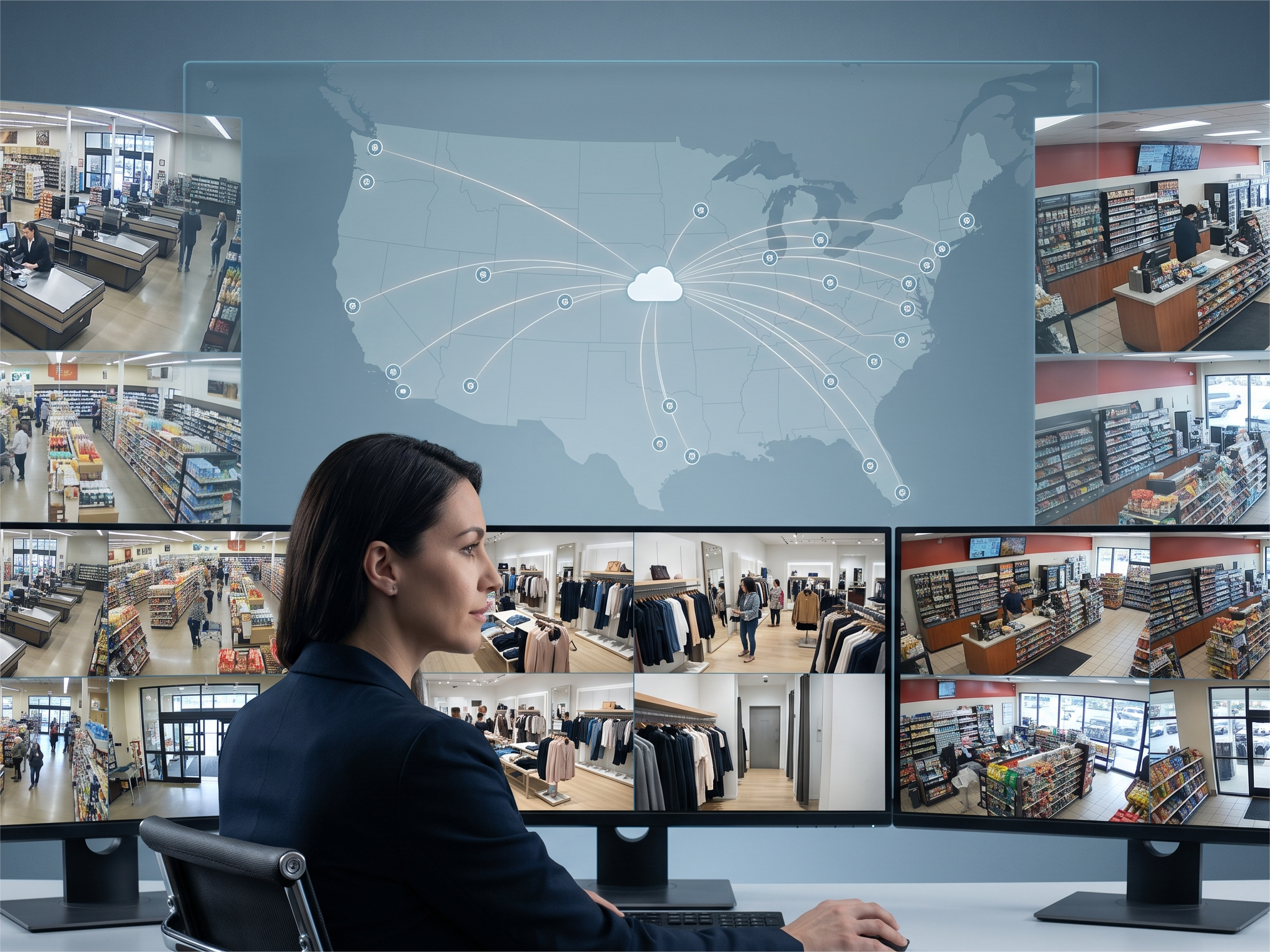
To defend against an evolving security environment, Verkada has emerged as the enterprise standard for retail security systems. Its cloud-based architecture eliminates the on-site server infrastructure that traditional CCTV systems require, replacing it with a unified management dashboard that gives multi-location retailers centralized visibility across every camera, access control point, and alert in their entire portfolio from a single interface. Their AI-powered analytics, automatic firmware updates, and plug-and-play installation make them the security platform built for the operational realities of modern retail.
Selecting the right retail security systems and deploying them with precision across every location is what separates retailers who control their losses from those who absorb them. This guide covers the security components every enterprise retail operation needs, what professional installation actually looks like, and how Kinettix delivers consistent, scalable security deployments from the first site survey to the final handoff.
What 7 Security Components Are Required For an Enterprise Retail Security System?

A comprehensive retail security system is built on multiple integrated layers, not a single device. The components below represent the full stack of technology that enterprise retailers rely on to deter theft, monitor store activity, and protect merchandise across every location.
-
Video Surveillance & CCTV Systems
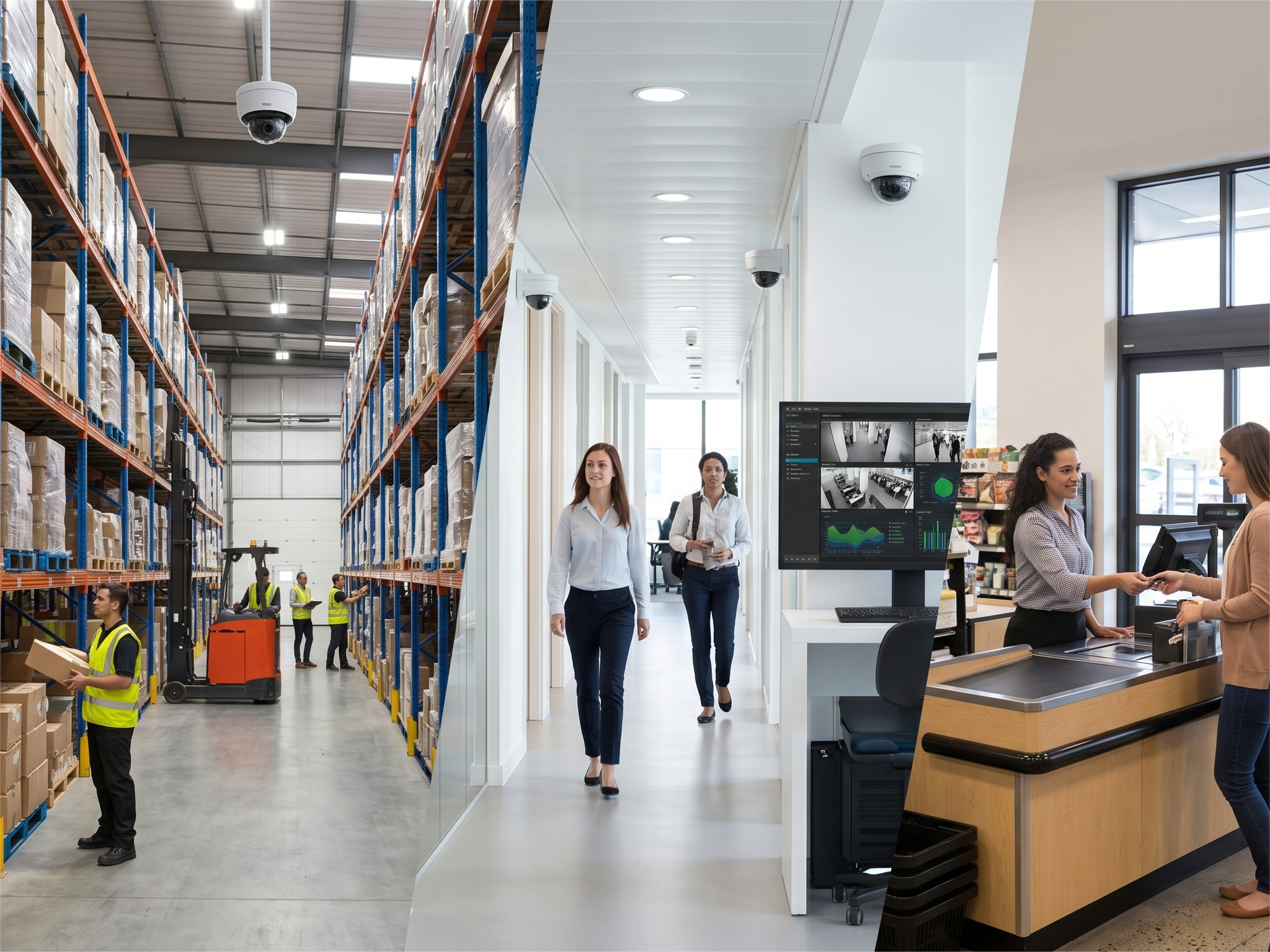
Video surveillance systems are the most visible and widely deployed component of any retail security setup, providing continuous monitoring of store activity across every area of the floor. Modern CCTV systems deliver high-definition footage accessible remotely, giving loss prevention teams real-time visibility whether they are on-site or managing multiple locations from a central dashboard.
- Electronic Article Surveillance (EAS) & Security Tags
EAS systems use security tags attached to merchandise and detection antennas positioned at store exits to trigger alarms when items pass through without proper deactivation at checkout. These retail security solutions are among the most effective tools available for deterring shoplifting, with studies showing they can reduce theft incidents by significant margins when deployed consistently.
- Access Control Systems
Access control systems restrict entry to stockrooms, server rooms, and other sensitive areas by requiring verified credentials from any employee attempting to enter. These systems create a documented access trail that supports internal theft investigations and reduces the risk of unauthorized personnel handling high-value merchandise.
- Intrusion Alarm Systems
A retail alarm system provides automated detection of unauthorized entry during non-business hours through motion sensors, door contacts, and glass-break detectors that trigger immediate alerts. When integrated with video surveillance, store alarm systems give security teams the ability to verify incidents remotely before dispatching a response, reducing false alarm rates and improving response accuracy.
- AI-Powered Video Analytics
AI-powered video analytics transform standard surveillance cameras into active threat detection tools by automatically identifying suspicious behaviors, unusual movement patterns, and potential theft in progress. These systems reduce the monitoring burden on loss prevention staff by surfacing actionable alerts rather than requiring manual review of continuous footage across dozens of camera feeds.
- Loss Prevention Software & POS Integration
Integrating retail security systems with point-of-sale data gives loss prevention teams visibility into transaction anomalies, unauthorized discounts, and return fraud patterns that would otherwise go undetected. This connection between video footage and POS activity creates a complete picture of store activity that makes it significantly easier to identify and investigate both internal theft and customer fraud.
- Environmental & Smart Sensors
Smart sensors monitor environmental conditions and behavioral anomalies including noise levels, air quality, occupancy, and vaping activity in fitting rooms, restrooms, and stairwells where cameras cannot be deployed. These devices extend a store's security awareness into spaces that traditional surveillance systems cannot cover, giving staff real-time alerts when conditions indicate a potential incident.
Verkada vs. Off-the-Shelf: Understand the True Comparison Before You Buy
Multi-site retailers evaluating security camera systems face a decision that has long-term operational consequences well beyond the initial purchase price. Off-the-shelf systems require on-site servers, manual firmware management, and siloed interfaces that create significant administrative overhead across a distributed store footprint. Verkada's cloud-based architecture eliminates DVR and NVR hardware dependencies entirely, delivering centralized management, automatic updates, and AI-powered analytics through a single unified dashboard.
For enterprise retailers managing security systems across dozens or hundreds of locations, that operational difference is not a minor feature gap; it is the difference between a system that scales and one that compounds costs. The comparison below captures what most vendor comparisons leave out.
|
Feature |
Verkada |
Off-the-Shelf / Generic Systems |
|
Cloud-Based Video Storage |
✅ |
❌ |
|
On-Site Server Required |
❌ |
✅ |
|
Remote Access via Mobile App |
✅ |
⚠️ Limited |
|
AI-Powered Motion Detection |
✅ |
❌ |
|
Local Data Sovereignty & On-Premise Control |
❌ |
✅ |
|
Motion-Triggered Recording |
✅ |
✅ |
|
Automatic Firmware Updates |
✅ |
❌ |
|
End-to-End Encryption |
✅ |
⚠️ Varies |
|
Plug-and-Play Installation |
✅ |
❌ |
|
Access Control Integration |
✅ |
⚠️ Limited |
|
Automatic Incident Alerts |
✅ |
⚠️ Add-On Only |
|
Offline Functionality |
✅ |
⚠️ Varies |
|
Long-Term Hardware Lifespan |
✅ |
⚠️ Varies |
|
Unified Security Dashboard |
✅ |
❌ |
|
Works Without Internet Connectivity |
❌ |
✅ |
|
Scalable Across Unlimited Locations |
✅ |
❌ |
|
No DVR/NVR Hardware Dependency |
✅ |
❌ |
|
HD Video Resolution |
✅ |
✅ |
|
Person & Vehicle Detection |
✅ |
❌ |
|
License Plate Recognition |
✅ |
⚠️ Add-On Only |
|
Centralized Multi-Site Management |
✅ |
❌ |
|
Integration with Third-Party Alarm Systems |
✅ |
✅ |
8 Steps Every Professional Retail Security Installation Must Execute Without Cutting Corners
A retail security system performs exactly as well as the installation behind it, and a poorly executed deployment creates coverage gaps that organized retail crime groups are quick to exploit. The eight steps below represent the professional installation standard that every multi-site retailer should expect from their field services partner.
- Pre-Installation Site Survey & Security Assessment
Every professional retail security installation begins with a thorough onsite evaluation of the store's layout, existing infrastructure, network readiness, and coverage requirements before any equipment is ordered or scheduled. Skipping this step is the single most common cause of mid-installation rework, missed coverage areas, and deployments that fail to meet the retailer's actual security needs.
- System Design & Technology Selection
Following the site survey, a detailed security system design maps camera placement, access control points, alarm zones, and sensor locations against the specific risk profile and operational requirements of each store. This design phase ensures the right technology is selected for each environment rather than applying a generic configuration that leaves critical areas unprotected.
- Network Infrastructure Preparation
Retail security systems, particularly cloud-managed platforms like Verkada, depend on stable, properly configured network infrastructure to function reliably across every location. Technicians must verify network connectivity, confirm PoE switch capacity, and resolve any infrastructure gaps before installation begins to prevent connectivity failures that compromise system performance from day one.
- Hardware Mounting & Physical Installation
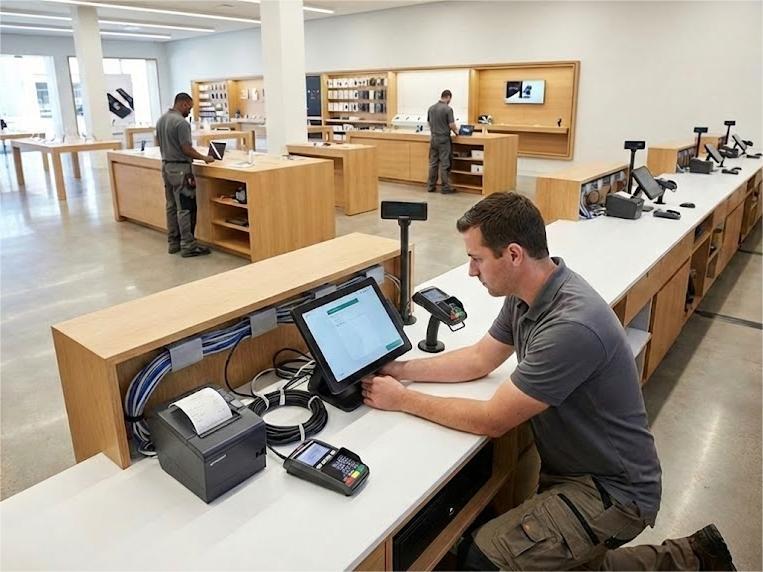
Camera mounting, access control hardware, alarm sensors, and EAS detection antennas must be installed using consistent, professional methods that prioritize coverage integrity, cable management, and long-term maintainability. Placement decisions made during this phase directly determine the system's ability to monitor store activity and detect theft, making precision and adherence to design specifications non-negotiable.
- System Configuration & Software Setup
Each device must be configured to the retailer's specific operational requirements, including camera field-of-view adjustments, alert thresholds, access credential assignments, and integration with any centralized management platforms. Standardized configuration protocols ensure that every location operates from the same baseline settings, eliminating the inconsistencies that create security gaps across a multi-site footprint.
- Integration with Existing Store Technology
Retail security systems deliver their greatest value when connected to the broader technology stack already operating in the store, including POS systems, inventory management platforms, and alarm monitoring services. Integration work must be validated at each location to confirm that data flows correctly between systems and that loss prevention teams have access to the unified visibility they need to act on security threats quickly.
- End-to-End Testing & Quality Validation
Before any installation is considered complete, every device and system integration must be tested against a defined set of acceptance criteria that confirms operational readiness across all security functions. This validation step catches configuration errors, coverage blind spots, and connectivity issues that would otherwise surface as failures during live store operations.
- Staff Orientation & Handoff Documentation
Store managers and loss prevention personnel must receive hands-on orientation covering system operation, alert response procedures, and escalation protocols before the installation team departs. Comprehensive handoff documentation, including device locations, configuration records, and support contacts, ensures the team responsible for the system can operate it confidently and maintain it effectively going forward.
Ready to Deploy a Retail Security System That Works Across Every Location?
Retail security system deployments fail when the technology is right, but the execution is inconsistent, and inconsistency compounds fast across a multi-site footprint. Kinettix brings:
- Certified technicians
- Centralized coordination
- Standardized installation protocols that turn a solid security investment into reliable, scalable protection across every store you operate
Reach out now to connect with a Kinettix field services specialist and build a deployment plan designed around your store count, your timeline, and your security requirements.
What 6 Qualities Should You Look For in a Nationwide Security Installation Partner?
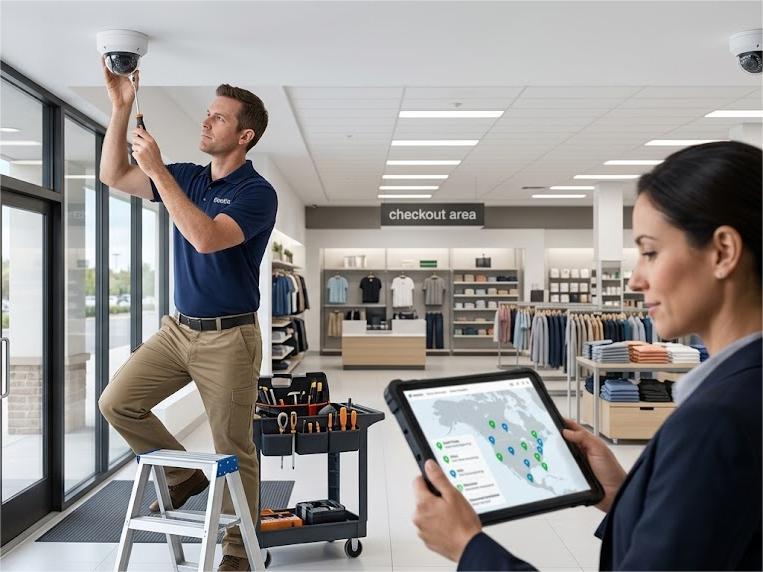
The technology powering your retail security system matters, but the partner executing the installation determines whether that technology actually protects your stores. These six qualities separate field services partners who deliver consistent, scalable results from those who treat every location as a one-off project.
- Proven Multi-Location Deployment Experience
A security installation partner with documented experience across large, distributed retail footprints understands the logistical complexity that comes with managing dozens of concurrent deployments across varied store layouts and geographies. That experience translates directly into fewer scheduling failures, faster site completion rates, and the ability to maintain quality standards when deployment velocity increases.
- Certified Technicians Across Multiple Security Platforms
Installation technicians should hold active certifications relevant to the specific security systems being deployed, including platform-specific credentials such as Verkada Technical Certifications for cloud-managed camera systems. Certification is not a formality; it is evidence that the technician executing your installation has been validated against the manufacturer's own standards for proper deployment.
- Dedicated Project Management Per Engagement
Every retail security deployment deserves a single, accountable project manager who owns the timeline, the technician coordination, and the communication between all stakeholders from kickoff through final handoff. Without dedicated project management, multi-site deployments fragment quickly into disconnected site visits with no central accountability for outcomes.
- Standardized Installation Protocols Across Every Site
The best security installation partners treat each engagement as a program rather than a collection of individual jobs, applying the same documented workflows, checklists, and quality standards at every location regardless of site-specific variables. Standardization is what makes a retail security rollout auditable, repeatable, and scalable without sacrificing the quality of any individual site.
- Real-Time Reporting & Digital Documentation
Retailers managing security deployments across multiple locations need visibility into progress, exceptions, and completion status in real time, not after-the-fact summaries that arrive days after a site closes out. A capable installation partner maintains digital workflows that capture site readiness findings, installation records, testing results, and handoff documentation in a consistent, accessible format from the first site to the last.
- Post-Installation Support & Break-Fix Capability
A retail security system's value depends on its uptime, and downtime after installation requires a partner with the field resources to respond quickly across any geography in the deployment footprint. The right installation partner maintains an on-demand dispatch network capable of handling troubleshooting, emergency repairs, and preventative maintenance long after the initial rollout is complete.
Case Study: How Kinettix Deployed a Nationwide Retail Security System Without a Single Location Left Behind
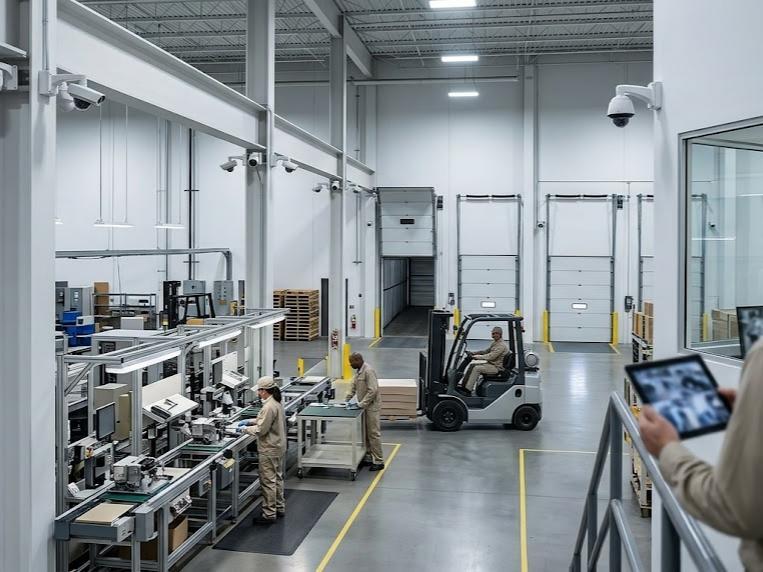
A multi-site industrial operator needed to modernize and standardize its physical security footprint without disrupting active facility operations. The core challenge was not simply deploying new Verkada security cameras, it was building a repeatable, scalable implementation model that delivered consistent installation quality, predictable coverage, and uniform documentation across every site in the portfolio. Leadership required a deployment approach that could expand location by location without reinventing the process each time.
Kinettix's Solution
Kinettix addressed the customer's standardization requirements by applying a structured field-services model built around repeatable work packages and centralized program coordination rather than isolated site-by-site execution.
- Standard Work Packages & Repeatable Deployment Workflows
Kinettix designed each site engagement around the same five-phase sequence: pre-visit planning, onsite readiness validation, standardized installation, functional testing, and closeout documentation. This consistent workflow ensured every facility received the same baseline level of execution diligence regardless of local site variables.
- Centralized Coordination to Reduce Site-to-Site Variability
Rather than allowing local site conditions to drive ad hoc decision-making, Kinettix used centralized scheduling, stakeholder alignment, and expectations-setting to keep every location operating from the same plan. Coordination at the program level is what prevents the operational friction that typically derails multi-site deployments when sites interpret requirements differently.
- Exception-Driven Reporting for Structured Deviation Management
When site-specific constraints arose, including network readiness gaps, inaccessible mounting surfaces, or unexpected cabling limitations, Kinettix documented exceptions clearly and routed follow-up actions through a structured process. This approach preserved standardization by ensuring inconsistencies were accounted for and counteracted.
Execution
Kinettix executed the deployment across five structured phases applied consistently at every site, eliminating the variability that typically compromises quality and schedule reliability in distributed security rollouts.
- Pre-Visit Alignment & Access Coordination
Kinettix confirmed site access plans, escort requirements, and logistics ahead of each visit so technicians could begin work on arrival without delays. Consistent pre-visit alignment is critical in multi-site environments where scheduling failures at one location create cascading impacts across the broader program timeline.
- Onsite Readiness Checks Using the Same Checklist at Every Site
Upon arrival, technicians performed structured readiness verification covering network connectivity, PoE switch capacity, mounting surface viability, and cable routing feasibility before any installation work began. Standardizing this checklist across every facility reduced the probability of partial installs caused by infrastructure gaps discovered mid-deployment.
- Standardized Verkada Device Installation & Cable Management
Using project managers holding Verkada Technical Certifications, Kinettix installed all devices with consistent mounting methods, clean cable management, and clear labeling that supported both current coverage requirements and future system expansion. Device placement decisions followed uniform principles rather than improvised location-by-location judgment calls.
- Functional Verification & Baseline Operational Testing
Every installed device was tested to confirm it was powered, connected, and operating at the baseline performance level required for operational use before the site was signed off. This verification step reduced the risk of post-installation revisits caused by preventable setup issues that would have surfaced as failures during live operations.
- Uniform Closeout Documentation & Program Handoff
Kinettix closed out each site with standardized documentation capturing work completed, validation steps performed, exceptions identified, and notes enabling ongoing support and future expansion. Consistent closeout packages gave the customer's stakeholders a uniform record set they could use to compare sites, confirm readiness, and plan the next phase of the rollout with confidence.
End Results
By treating the engagement as a scalable deployment program rather than a series of individual site visits, Kinettix delivered outcomes that extended well beyond camera installation.
- A Repeatable Deployment Blueprint Built to Scale
Each site followed a consistent lifecycle from readiness through closeout, giving the customer a proven process they could replicate across additional locations without rebuilding expectations or documentation from scratch.
- More Predictable Installation Quality Across All Facilities
Standardized installation methods and acceptance criteria improved workmanship uniformity and reduced the placement variability and post-install troubleshooting that typically follows inconsistent multi-site deployments.
- Fewer Surprises Through Standardized Readiness Validation
Early infrastructure gap identification allowed the team to manage site-specific constraints as documented exceptions rather than as hidden risks that surface at the worst possible moment during deployment.
- Stronger Documentation for Audits & Future Expansion
Consistent closeout records created an accountable, auditable system of record that supports ongoing maintenance, internal governance reviews, and confident planning for future rollout phases.
The Real Cost of Retail Security Failure (& How Integrated Systems Prevent Them)
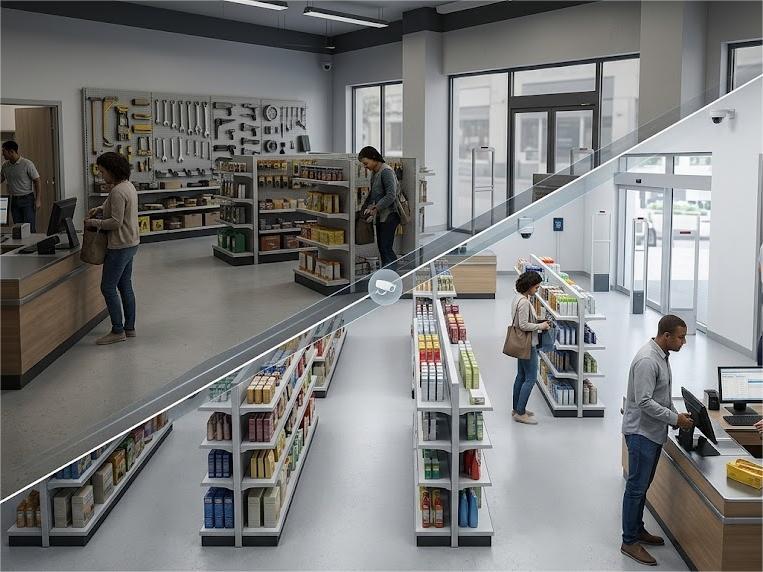
Retail security failures do not always announce themselves immediately. Shrinkage accumulates quietly, liability exposure builds without video evidence, and operational blind spots widen as store counts grow without a consistent security standard in place.
The consequences below represent the real financial and operational cost of inadequate retail security systems, and the specific ways that integrated, professionally deployed solutions prevent each one.
- Shrinkage From Undetected Shoplifting
Retail shrinkage driven by shoplifting is a direct, recurring drain on profit margins that compounds across every store location operating without adequate surveillance coverage. Visible security cameras, EAS systems, and AI-powered video analytics work together to deter opportunistic theft and surface incidents that would otherwise go undetected until inventory reconciliation.
- Organized Retail Crime Targeting Unprotected Stores
ORC groups actively identify and target retail locations with weak or inconsistent security systems, treating gaps in coverage as low-risk opportunities for high-volume merchandise theft. Integrated retail security systems with centralized monitoring, license plate recognition, and real-time alerts make stores significantly harder targets and support the evidence collection law enforcement requires for prosecution.
-
Internal Theft Without Accountability Systems
Employee theft accounts for a substantial share of total retail shrinkage, and it flourishes in environments where POS activity, cash handling, and stockroom access are not monitored through integrated security systems. Access control systems, POS-integrated loss prevention software, and surveillance coverage of restricted areas create the accountability infrastructure that deters internal theft and accelerates investigation when incidents occur.
- False Liability Claims With No Video Evidence
Slip-and-fall claims, customer dispute allegations, and fraudulent return scams cost retailers significant sums when there is no video evidence to contradict them. Comprehensive surveillance coverage with reliable cloud-based storage ensures that footage is available, accessible, and admissible when legal or insurance situations require it.
- Compliance Failures & Regulatory Exposure
Retailers in industries handling sensitive customer payment data face regulatory requirements that extend into their physical security infrastructure, including controls around access to systems that process cardholder data. A properly designed and documented retail security system supports compliance audit readiness and reduces the risk of regulatory exposure created by uncontrolled access to sensitive operational areas.
- Reputational Damage After High-Profile Incidents
A violent incident, a high-profile theft, or a widely shared video of inadequate store security can produce reputational consequences that far outlast the original event. Proactive retail security systems, including smart sensors, integrated alarm systems, and rapid response capabilities, reduce incident frequency and demonstrate to customers and employees that safety is a managed priority.
- Operational Blind Spots From Siloed Systems
Retail security technology that operates in disconnected silos forces loss prevention teams to switch between platforms, manually correlate data, and respond to incomplete information when speed matters most. Integrated retail security solutions that unify video, access control, alarms, and analytics into a single management interface eliminate those blind spots and give security teams the unified situational awareness they need to act decisively.
- Emergency Response Delays Without Integrated Alerts
When a security incident escalates, the speed of the response directly determines the severity of the outcome, and delayed alerts caused by disconnected systems cost critical minutes. Integrated alarm systems with automated alert routing, panic button capabilities, and direct law enforcement notification channels compress response times and improve outcomes across every store in the footprint.
- Multi-Location Inconsistency Creating Security Gaps
A retail chain is only as secure as its least-protected location, and inconsistent security standards across a distributed store portfolio create exploitable gaps that organized retail crime groups identify and target. Standardized retail security systems deployed through a disciplined, repeatable installation process ensure that every location meets the same coverage baseline rather than leaving individual stores exposed by ad hoc deployment decisions.
7 Questions You Need Answered About Retail Security Systems Before You Deploy
The right retail security system investment starts with the right questions, and the answers below are designed to address the operational and logistical realities that most vendor conversations leave out. Each question below addresses a distinct planning consideration that directly affects deployment outcomes, ongoing costs, and long-term system performance.
-
How long does a full retail security system installation typically take?
Installation timelines vary based on store size, system complexity, and the number of devices being deployed at each location. A straightforward single-store installation involving cameras, basic access control, and an alarm system can be completed in one to two days by a qualified field team, while a multi-system deployment across a large-format store with complex infrastructure requirements may require several days of coordinated onsite work.
- Can retail security systems be scaled as new store locations open?
Cloud-managed platforms like Verkada are purpose-built for scalable deployment, allowing new locations to be added to a centralized management dashboard without requiring new server infrastructure at each site. The scalability of the system itself, however, depends equally on the deployment partner's ability to execute consistent installations at pace, which requires a field services provider with an on-demand technician network and standardized workflows ready to mobilize across new geographies.
- What is the difference between cloud-based and on-premise retail security storage?
Cloud-based storage keeps video footage on remote servers managed by the security platform provider, accessible from any authorized device without requiring on-site hardware like DVRs or NVRs. On-premise storage keeps footage on local hardware installed at each location, which requires physical maintenance, creates single-point-of-failure risk if hardware is damaged or stolen, and increases the administrative overhead of managing a multi-site security footprint.
- How do retail security systems integrate with existing POS and inventory platforms?
Modern retail security platforms integrate with POS systems through APIs that link transaction data to corresponding video footage, enabling loss prevention teams to quickly pull camera footage associated with a specific transaction, refund, or discount event. The depth of that integration depends on both the security platform's native capabilities and the configuration work performed during installation, which is why POS integration validation is a required step in any professional retail security deployment.
- What certifications should a retail security installation technician hold?
Technicians installing retail security systems should hold credentials relevant to the specific platforms being deployed, including manufacturer-specific certifications such as Verkada Technical Certifications for cloud-managed camera systems, as well as broader industry credentials like CompTIA Security+. Beyond certifications, retailers should verify that installation technicians have documented experience with multi-site deployments, carry appropriate insurance, and have undergone background screening before being granted access to store environments.
- Who is responsible for ongoing maintenance after the system goes live?
Ongoing maintenance responsibility should be explicitly defined in the service agreement with the installation partner before deployment begins, covering scheduled preventative maintenance, firmware update management, hardware replacement, and emergency break-fix response. Cloud-managed platforms like Verkada handle firmware updates and software maintenance automatically, but physical hardware maintenance and emergency field response still require a capable service partner with technicians available across the retailer's full geographic footprint.
- How do retailers handle security system deployment across multiple locations simultaneously?
Multi-location simultaneous deployment requires a field services partner with an on-demand technician dispatch network, centralized project management infrastructure, and standardized installation protocols that can be executed consistently regardless of which technician is assigned to a given site. Retailers attempting to manage concurrent multi-site deployments through local contractors or internal IT teams routinely encounter scheduling conflicts, inconsistent installation quality, and documentation gaps that create long-term operational and compliance problems.
Protect Your Retail Store With a Security Partner Who Handles Everything from Install to Go-Live
Kinettix delivers end-to-end retail security system deployment for multi-location retailers who need consistent execution, certified technicians, and a single accountable partner managing the entire installation program. From the first site survey through final handoff documentation, our field services model is built to scale across any store count, any geography, and any security technology stack, including:
- Verkada camera systems
- Access control platforms
- Integrated alarm infrastructure
Every deployment we execute follows standardized workflows, documented quality checkpoints, and real-time reporting that gives retail leadership visibility into program progress from day one.
Contact us today to connect with a Kinettix retail security deployment specialist and get a scoped assessment built around your locations, your timeline, and your specific security requirements.