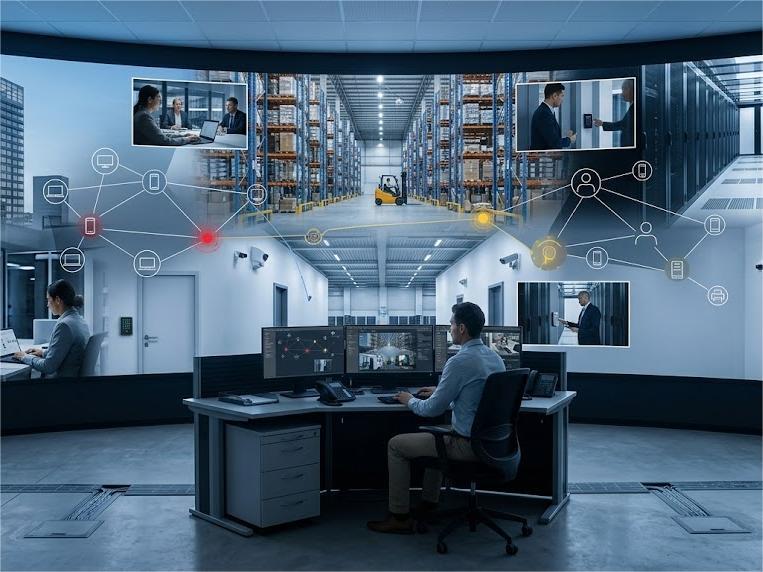
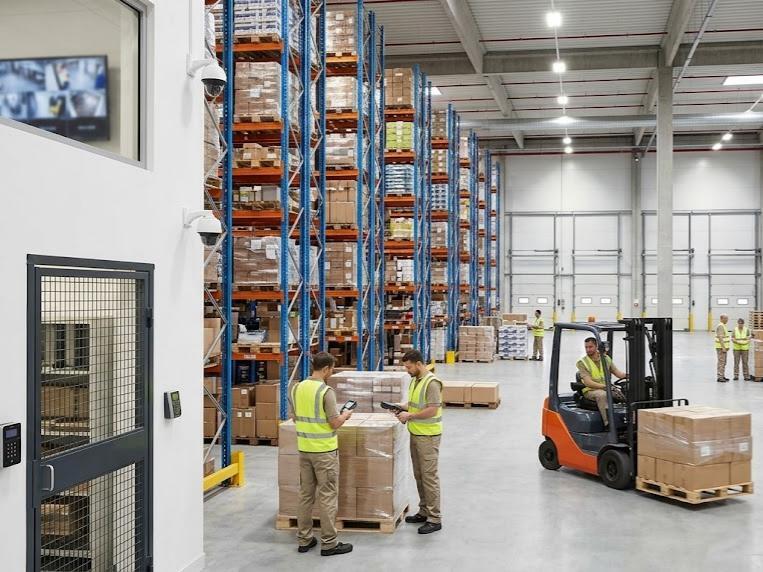
Theft, unauthorized access, and operational blind spots cost U.S. businesses an estimated $90 billion annually in retail shrink alone, with 73% of those losses considered preventable according to the Appriss Retail 2026 Total Retail Loss Benchmark Report. The facilities most at risk are those running security infrastructure that was never designed for the scale or complexity of modern warehouse operations.
Verkada's AI-powered cloud platform delivers the comprehensive warehouse security solutions that enterprise distribution environments demand, and Kinettix provides the field services infrastructure to deploy it correctly across every facility in your network. This guide covers every dimension of effective warehouse security, from the threats most operations overlook to the step-by-step deployment process that turns a vulnerable facility into a secure one.
10 Security Technologies That Cover Every Zone of a Modern Warehouse Facility
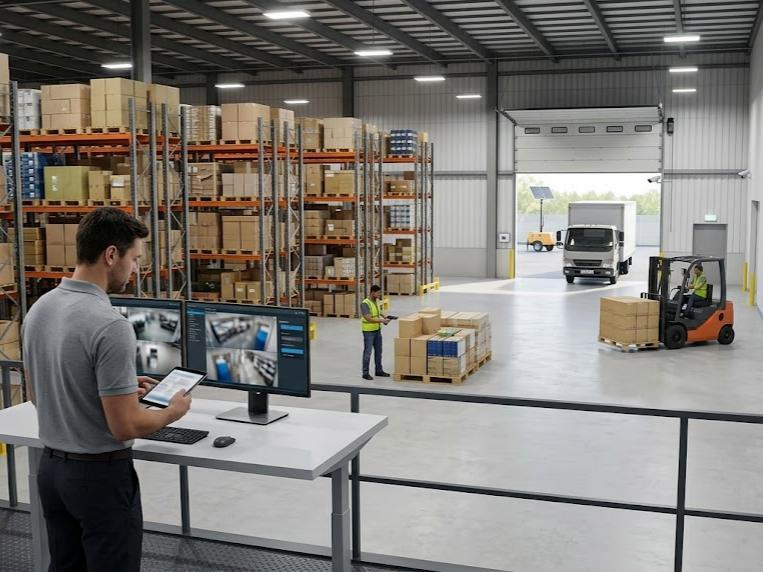
Modern warehouse security solutions are built on layers of integrated technology that work together to prevent unauthorized access, detect threats in real time, and give security teams the visibility they need to respond before incidents escalate. The components below represent the current standard for enterprise-grade warehouse security.
-
AI-powered video surveillance cameras
AI-enhanced warehouse security cameras do more than record footage; they analyze it continuously, distinguishing between people, vehicles, and objects to surface only the alerts that matter. High-definition cameras with onboard processing deliver real-time threat detection across every zone of the facility without generating the false alarm volume that overwhelms security personnel.
- Cloud-based security management platforms
A cloud-based security management system gives warehouse operators centralized visibility across every camera, access point, and alarm in their entire facility network from a single interface. Remote access, automatic updates, and cross-site reporting eliminate the infrastructure overhead of traditional on-premise security management systems.
- License plate recognition at loading docks
License plate recognition technology automatically logs every vehicle entering and exiting loading dock areas, creating a documented record of all inbound and outbound traffic without requiring manual check-in processes. Integrated with access control, LPR systems can restrict dock entry to approved vehicles and flag unauthorized plates in real time.
- Biometric and facial recognition access control
Biometric scanners and facial recognition access control systems eliminate credential sharing and tailgating by tying entry authorization directly to the individual rather than a card or code. Modern systems like Verkada's Access Station Pro deliver frictionless, face-based entry while maintaining a complete audit trail of every access event.
- Wireless smart locks managed remotely
Cloud-managed wireless locks allow security teams to control every door across a distributed warehouse network without the cost and complexity of hardwired installation. Remote locking, unlocking, and credential management give operations teams immediate response capability regardless of where the door or the administrator is located.
- Intrusion detection integrated directly with access control
Intrusion detection systems that operate independently of access control leave response gaps that attackers can exploit. Integrated platforms that trigger alarm events directly from access control activity, such as a door forced open or held beyond threshold, provide faster, more accurate detection without additional sensor infrastructure.
- Environmental sensors for fire and air quality monitoring
Warehouse environments store high concentrations of goods, equipment, and in many cases flammable materials, making fire detection and air quality monitoring a security necessity beyond the physical threat categories. Environmental sensors integrated into a unified security platform surface hazard alerts alongside physical security events in a single management view.
- Remote LTE cameras for outdoor yards and ungated perimeters
Outdoor storage yards, vehicle staging areas, and remote perimeter zones frequently fall outside the network infrastructure required by standard IP cameras. Remote LTE-connected cameras provide full surveillance coverage in areas without power or network access, eliminating the perimeter blind spots that external threats depend on.
- People and vehicle counting analytics
People and vehicle counting analytics give warehouse security and operations teams a data layer that passive camera footage alone cannot provide. Occupancy tracking, traffic pattern analysis, and capacity monitoring help identify anomalies in movement that correlate with security risks, from unusual off-hours activity to unauthorized zone access.
- Solar-powered mobile security units for temporary deployments
Construction phases, seasonal overflow facilities, and temporary distribution operations require security coverage that can be deployed and relocated without permanent infrastructure. Solar-powered mobile units supporting multiple Verkada devices deliver full camera and sensor coverage wherever the operation moves.
10 Signs Your Warehouse Is Running on a Security System That Belongs in a Museum
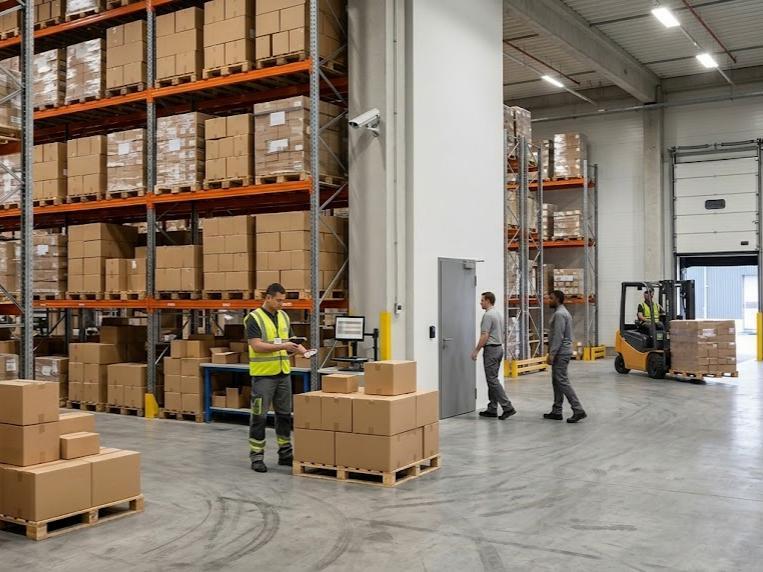
Most warehouse security gaps are invisible until the moment they become expensive, and the systems meant to prevent them are often the ones failing silently in the background. The risks and warning signs below are the ones that consistently surface in post-incident reviews, after the damage has already been done.
- Internal Theft by Trusted Employees
Internal theft typically goes undetected for months before patterns emerge, and without video surveillance covering storage zones, picking areas, and shipping stations, there is no documented visual record to cross-reference against inventory discrepancies when they surface.
- Tailgating Through Secured Entry Points
Tailgating bypasses access control entirely, and a single unsupervised entry point with no camera coverage or anti-passback configuration turns a card reader installation into a false sense of security.
- Unsecured Loading Dock Access
Loading docks are the highest-volume entry and exit point in any warehouse environment and the area most frequently left outside formal access control and camera coverage. When dock access is not tied to a documented, monitored system, the security threats moving through it go entirely undetected.
- Blind Spots From Poor Camera Placement
Most facilities have more camera blind spots than their security teams realize. High ceilings, wide floor plans, racking structures, and column layouts all create angles that standard placements miss without deliberate site assessment.
- Vendor and Contractor Access That Goes Unmonitored
Third-party vendors and contractors fall outside the formal employee credentialing process in most facilities. Without visitor management protocols, time-limited credentials, and camera coverage at vendor entry zones, contractor activity inside the warehouse remains entirely undocumented.
-
After-Hours Perimeter Breaches
Warehouses with limited overnight staffing and no automated intrusion detection are the most vulnerable to after-hours breaches that go unnoticed until morning inventory. Motion-triggered alerts and AI-enabled perimeter cameras are the difference between a breach stopped mid-event and one discovered the following shift.
- Footage Stored on On-Site DVRs or NVRs
On-site video storage creates a single point of failure that can be destroyed or corrupted in the same incident the footage was meant to document. Modern warehouse security solutions use hybrid cloud architecture to store footage securely off-site with remote access available from any authorized device.
- No Automated Alerts for Motion, Forced Doors, or Device Failures
A security system that requires someone to be actively watching a monitor offers no real protection, and cameras that fail silently can leave blind spots undetected for days. Automated alarm triggers and cloud-managed device health monitoring are baseline requirements of any comprehensive warehouse security system today.
- Access Control Still Relying on Physical Keys or PIN Codes
Physical keys cannot be remotely deactivated, and PIN codes get shared in ways that destroy the integrity of any access control system. Modern solutions use card credentials, mobile access, and biometric scanners that are individually assignable, immediately revocable, and fully logged.
- Security Audits That Require Manual On-Site Walkthroughs
A security posture that can only be assessed by physically visiting each facility is not manageable at enterprise scale. Centralized dashboards surfacing device health, access logs, and alarm histories across every site eliminate the operational burden of manual security reviews entirely.
What Makes Verkada the Operational Standard for Enterprise Warehouse Security?
Verkada's platform was built for organizations that cannot afford the visibility gaps, maintenance overhead, and management complexity that traditional security systems create at scale. Every component of the platform is designed to integrate with every other, giving warehouse and distribution center operators a single source of truth across their entire security footprint.
|
Verkada Service |
Impact |
|
Single unified dashboard across unlimited sites |
Manage every camera, access point, and alarm across your entire warehouse network from one interface, with no site-switching or separate logins required |
|
Hybrid cloud edge processing |
Onboard camera processing eliminates NVR and DVR hardware, reducing maintenance costs and removing single points of failure from the security architecture |
|
AI Unified Timeline |
Automatically reconstructs the complete movement of people and vehicles across all cameras and access events for faster, more accurate incident investigation |
|
Automatic firmware updates |
Security patches and feature updates deploy automatically across every device in the organization without manual intervention or scheduled maintenance windows |
|
Role-based permissions |
Access and visibility controls are set at the individual user level, ensuring that employees, contractors, and security personnel only see what their role requires |
|
Alarm automation |
Alarms trigger directly from access control events including forced doors and held-open alerts without requiring additional sensors or wiring |
|
Seamless Scalability |
Adding facilities, cameras, and access points to an existing Verkada organization requires no new server infrastructure and no reconfiguration of the existing deployment |
Here's How Kinettix + Verkada Close The Gaps in Your Warehouse Security
Selecting the right warehouse security technology is only half the equation. The other half is deploying it with the precision and coordination that enterprise environments require, and that is exactly where Kinettix delivers.
Reach out now to connect with a Kinettix deployment specialist and learn how a Verkada-powered warehouse security solution gets installed, configured, and handed off to your team with zero gaps and full documentation.
What to Look For in a Field Services Partner for Enterprise-Scale Warehouse Deployments
Deploying warehouse security solutions across a distributed network of facilities requires more than a technology selection and a shipment of hardware. The execution layer, meaning the technicians, the coordination infrastructure, and the deployment protocols, determines whether the system performs as designed or creates the gaps it was supposed to close.
|
Trait |
What It Means in Practice |
What Happens Without It |
|
Nationwide technician coverage |
Qualified techs dispatched to every facility regardless of location |
Inconsistent installation quality across sites |
|
Standardized deployment protocols |
Every site follows the same installation and configuration workflow |
Security gaps created by site-to-site variation |
|
Centralized project coordination |
One point of contact managing every technician, timeline, and deliverable |
Miscommunication, delays, and missed go-live dates |
|
Documented site closeout |
Every install formally verified, tested, and signed off before handoff |
Undetected coverage gaps and configuration errors discovered after go-live |
|
Multi-vendor technology experience |
Technicians trained on the specific platform being deployed |
Improper configuration that undermines the technology's full capability |
|
Scalability across distributed facilities |
Capacity to run parallel deployments across multiple locations simultaneously |
Rollout timelines that stretch months longer than necessary |
|
Real-time dispatch visibility |
Live tracking of technician status, arrival, and task completion at every site |
No accountability when installs run behind or go off-spec |
Every row in that table represents a failure mode that organizations encounter when they treat warehouse security deployment as a procurement exercise rather than a field operations challenge. Kinettix was built to close every one of those gaps, with vetted field technicians across all 50 U.S. states and 90+ countries operating under standardized protocols and centralized coordination for every deployment.
Case Study: How Kinettix Standardized Verkada Security Deployments Across a Distributed Industrial Portfolio
A multi-site industrial operator needed to overhaul and standardize its physical security infrastructure without taking active facilities offline or disrupting ongoing warehouse operations. The central challenge extended beyond installing new Verkada security cameras across locations; it required building a scalable, repeatable deployment model that produced consistent installation quality, predictable camera coverage, and uniform site documentation at every facility in the network. The operator's leadership needed a process that could be replicated from one location to the next without rebuilding the execution plan each time.
Kinettix's Solution
|
Phase |
What Kinettix Did |
Why It Mattered |
|
Pre-Visit Planning |
Confirmed site access plans, escort requirements, and logistics before each visit |
Technicians began work immediately on arrival with no scheduling delays |
|
Onsite Readiness Validation |
Ran a standardized checklist covering PoE capacity, network connectivity, cable routing, and mounting surfaces at every facility |
Prevented partial installs caused by infrastructure gaps discovered mid-deployment |
|
Standardized Installation |
Verkada-certified project managers oversaw uniform mounting, cable management, and device labeling at every location |
Eliminated placement variability and ensured consistent coverage quality across all sites |
|
Functional Verification |
Every device tested for power, connectivity, and baseline performance before site sign-off |
Reduced post-installation revisits caused by setup issues that would otherwise surface after go-live |
|
Closeout Documentation |
Each site closed out with a uniform package capturing completed work, validation results, and exception notes |
Gave stakeholders a comparable, auditable record set across every facility in the portfolio |
Program-Level Outcomes
|
Result |
Impact |
|
Repeatable deployment blueprint |
Proven process applicable to future locations without rebuilding from scratch |
|
Consistent installation quality |
Reduced placement variability and post-install troubleshooting across all facilities |
|
Early infrastructure gap identification |
Site-specific constraints surfaced and resolved before deployment rather than during it |
|
Uniform closeout documentation |
Auditable system of record supporting maintenance, governance reviews, and future expansion planning |
How Secure Is Your Warehouse Environment? 9-Step Test to Check
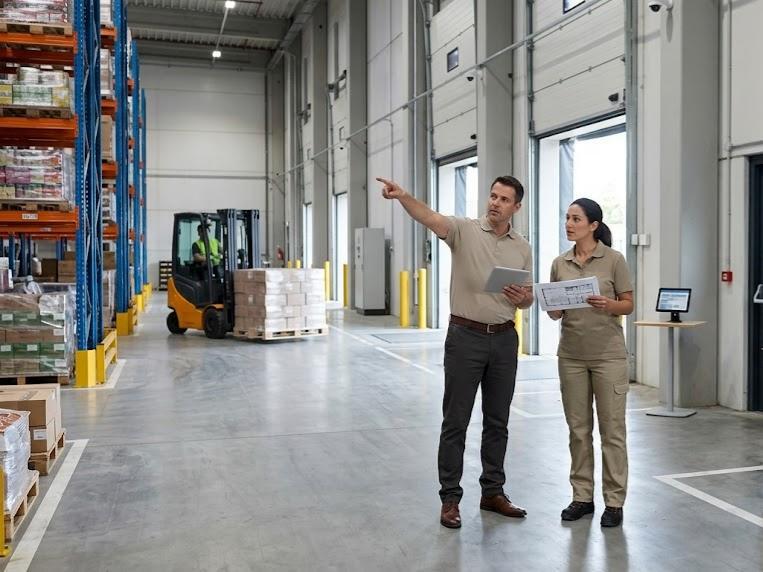
Securing a warehouse environment is not a single decision; it is a structured process that builds layers of protection across every zone, entry point, and access tier in the facility. The steps below represent the framework that security professionals use to move from a vulnerable warehouse to a fully protected one:
|
Step |
Action |
Key Outcome |
|
1. Security Audit |
Identify every existing system, coverage gap, and physical vulnerability in the facility |
Establishes the baseline so new systems close gaps rather than layer on top of them |
|
2. Entry Point Mapping |
Document every door, dock bay, gate, and access point with its control status, traffic volume, and risk classification |
Creates the blueprint that determines access control hardware placement and credential tiers |
|
3. Blind Spot Analysis |
Conduct a physical walkthrough combined with a camera placement analysis to surface coverage gaps and obstructions |
Addressing blind spots in the design phase costs significantly less than correcting them post-installation |
|
4. Permission Structure Definition |
Map which personnel categories require access to which zones before any deployment begins |
Ensures the access control system enforces security rather than simply logging it |
|
5. Camera Selection and Positioning |
Account for ceiling height, lighting conditions, indoor and outdoor requirements, and zone-specific analytics needs |
Produces coverage decisions based on actual facility layout rather than generic installation guidelines |
|
Install credential technology at every external entry point and internal zone transition, matched to the security requirement of each area |
Closes the internal and external access gaps that unsecured zone transitions create |
|
|
7. Alarm System Integration |
Connect alarm systems directly to access control and camera events so triggers fire simultaneously across all three |
Compresses the time between detection and response by eliminating the gaps between independent systems |
|
8. Third-Party Access Protocols |
Implement visitor management systems, time-limited credentials, and escort requirements for all vendor and contractor access |
Brings third-party activity inside the formal security perimeter rather than leaving it unmanaged |
|
9. Ongoing Review Schedule |
Schedule regular security audits, permission reviews, and device health assessments |
Ensures the system continues to perform at its designed level as the facility evolves over time |
8 Warehouse Security Questions That Deserve a Direct Answer Before You Deploy
Warehouse operators planning a security deployment consistently encounter the same practical questions. The answers below cover what matters most before committing to a solution:
- How Much Does a Warehouse Security System Cost?
Enterprise-grade deployments typically range from tens of thousands to several hundred thousand dollars depending on facility size, camera count, access control points, and installation complexity. The most accurate cost assessment comes from a facility-specific scope rather than a generic estimate.
- How Many Cameras Does a Warehouse Actually Need?
Camera count is determined by square footage, ceiling height, racking density, and the number of zones requiring independent coverage. Generic formulas routinely under-specify for warehouse environments, making a professional placement analysis the only reliable method.
- What Is the Difference Between Access Control and Alarm Systems?
Access control manages who is permitted to enter specific areas using credentials. Alarm systems detect and signal unauthorized events such as forced entry or motion in restricted zones. The most effective warehouse security solutions integrate both into a single platform with a unified response workflow.
- Can Warehouse Security Systems Integrate With Existing Inventory Management Software?
Modern cloud-based platforms like Verkada use open API architecture that supports third-party integrations, though compatibility depends on the specific inventory management platform in use. Integration enables use cases like correlating camera footage timestamps with inventory transaction records to strengthen loss prevention investigations.
- Who Is Responsible for Maintaining a Warehouse Security System After Installation?
Cloud-managed platforms like Verkada handle firmware updates and software patches automatically. Physical hardware maintenance and configuration changes typically fall to the installation partner, making the choice of field services provider a long-term operational decision.
- What Compliance or Insurance Requirements Apply to Warehouse Security?
Requirements vary by industry and jurisdiction, with sectors like pharmaceuticals and high-value goods subject to specific physical security standards. Many insurance carriers require documented access control logs, camera coverage, and alarm monitoring as conditions of coverage or premium qualification.
- How Long Does a Professional Warehouse Security Installation Take?
A single-facility installation typically takes one to three days when infrastructure readiness has been confirmed in advance. Multi-site enterprise programs are scoped as phased rollouts with parallel deployment tracks rather than sequential site-by-site scheduling.
- What Happens to Security During a System Transition or Upgrade?
A professional installation partner manages transitions in phases, keeping existing infrastructure operational while new systems are installed and validated in parallel. Full cutover only occurs after every device has been tested and confirmed operational, ensuring no gap in active coverage during the changeover.
Schedule Your Security Update Before It Schedules Itself: Connect with Field Experts Today
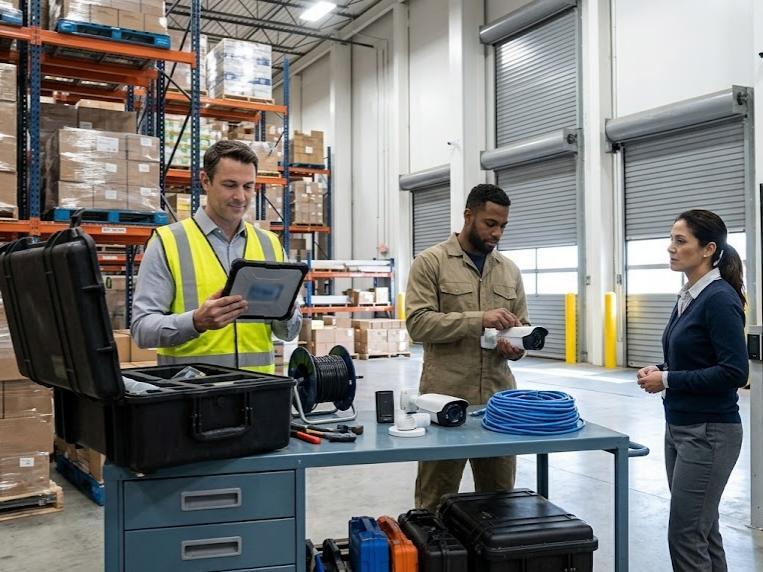
A security incident does not wait for a convenient time to occur, and the facilities that absorb the highest losses are consistently the ones that delayed a security upgrade they already knew was necessary. The gap between recognizing a vulnerability and closing it is where the most preventable losses happen.
Contact us today to start the conversation about your warehouse security deployment, and get a field services partner who treats your facilities with the same operational seriousness you do. The right warehouse security solution, professionally deployed, is the last line of defense between your inventory and everyone trying to take it.